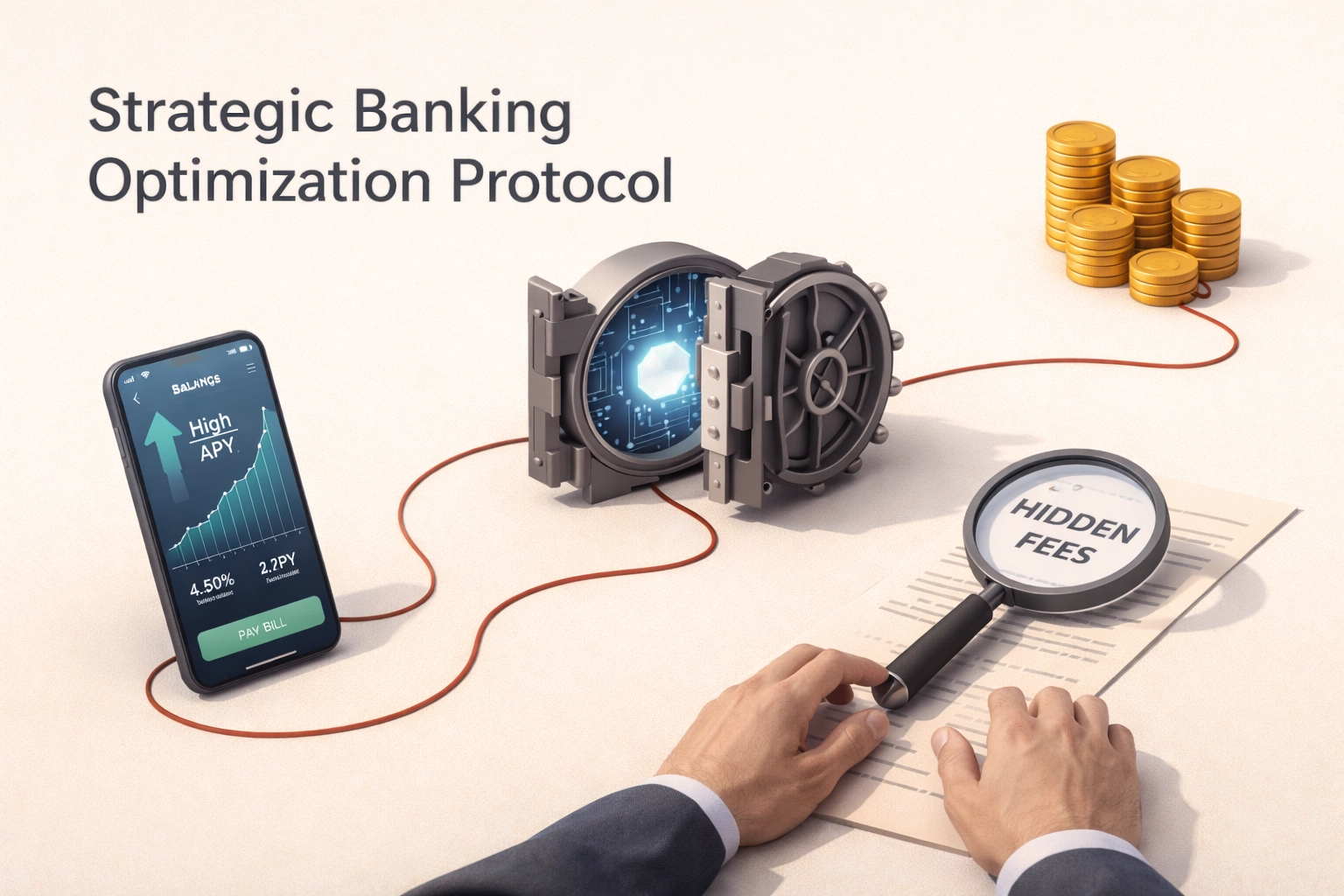
 2026 Banking Strategy
Banking Protocol:
Stop Paying Fees & Maximize Yield
This protocol organizes the core banking decisions every U.S. depositor must make: where to store cash, how to avoid unnecessary fees, and how to protect deposits under FDIC insurance limits.
Each guide below explains one structural decision in the banking system — from choosing a high-yield savings account to defending against overdraft penalties and managing emergency liquidity.
Designed for working professionals, this protocol replaces default banking behaviors with a deliberate system for maximizing yield and protecting capital.
This protocol follows a three-phase framework used by financial planners to optimize liquidity: (1) Optimize where cash is stored for maximum yield, (2) Eliminate unnecessary banking fees and predatory lending traps, and (3) Build automated systems and legal protections around your deposits. Each section below addresses one of these structural decisions, ensuring your banking setup functions as a wealth-building tool rather than a drain on your resources.
Check your banking signals:
- Earning less than 4.00% APY on your savings? Yes
- Paying monthly maintenance or overdraft fees? Yes
- Relying on cash advance apps before payday? Yes
- Denied a bank account due to past history? Yes
Target Outcome
LIQUIDITY & YIELD Eliminate Junk Fees + Automate Cash FlowAccount Optimization & Yield
3 GuidesYour cash is melting due to inflation. Storing money in a 0.01% traditional savings account is a guaranteed loss. Move your liquidity to a High-Yield Savings Account (HYSA) immediately, and use Certificates of Deposit (CDs) to lock in peak rates. By understanding the core differences between an HYSA and regular savings, you can instantly upgrade your cash flow. If you are comparing online vs traditional banks, abandoning brick-and-mortar locations is the first step to zero-fee, high-yield optimization.
Fee Defense & Emergency Math
3 GuidesBank fees are a penalty for the uninformed. Opting into overdraft protection gives the bank legal permission to charge you $35 for a $4 coffee. Reject it. Structural fee avoidance starts when you officially submit an overdraft protection opt-out request. To permanently insulate yourself from predatory cash advance apps vs payday loans, you must build a mathematically calculated emergency fund that acts as a buffer between your bills and your checking account.
System Automation & Defense
3 GuidesWillpower fails; automation does not. Financial discipline becomes reliable only when the movement of money is systemized. By splitting direct deposits between checking and savings, budgeting becomes an automatic structure rather than a daily decision. To understand how deposit protection works in practice, see the full explanation of FDIC insurance limits. If your banking history prevents you from executing this protocol, our guide on how to clear your ChexSystems report explains the FCRA dispute process.
- Paying monthly maintenance fees
- Opting into overdraft protection
- Locking emergency funds in CDs
- Exceeding FDIC limits at one bank