The Real Emergency Fund:
How Much Cash Do You Actually Need?
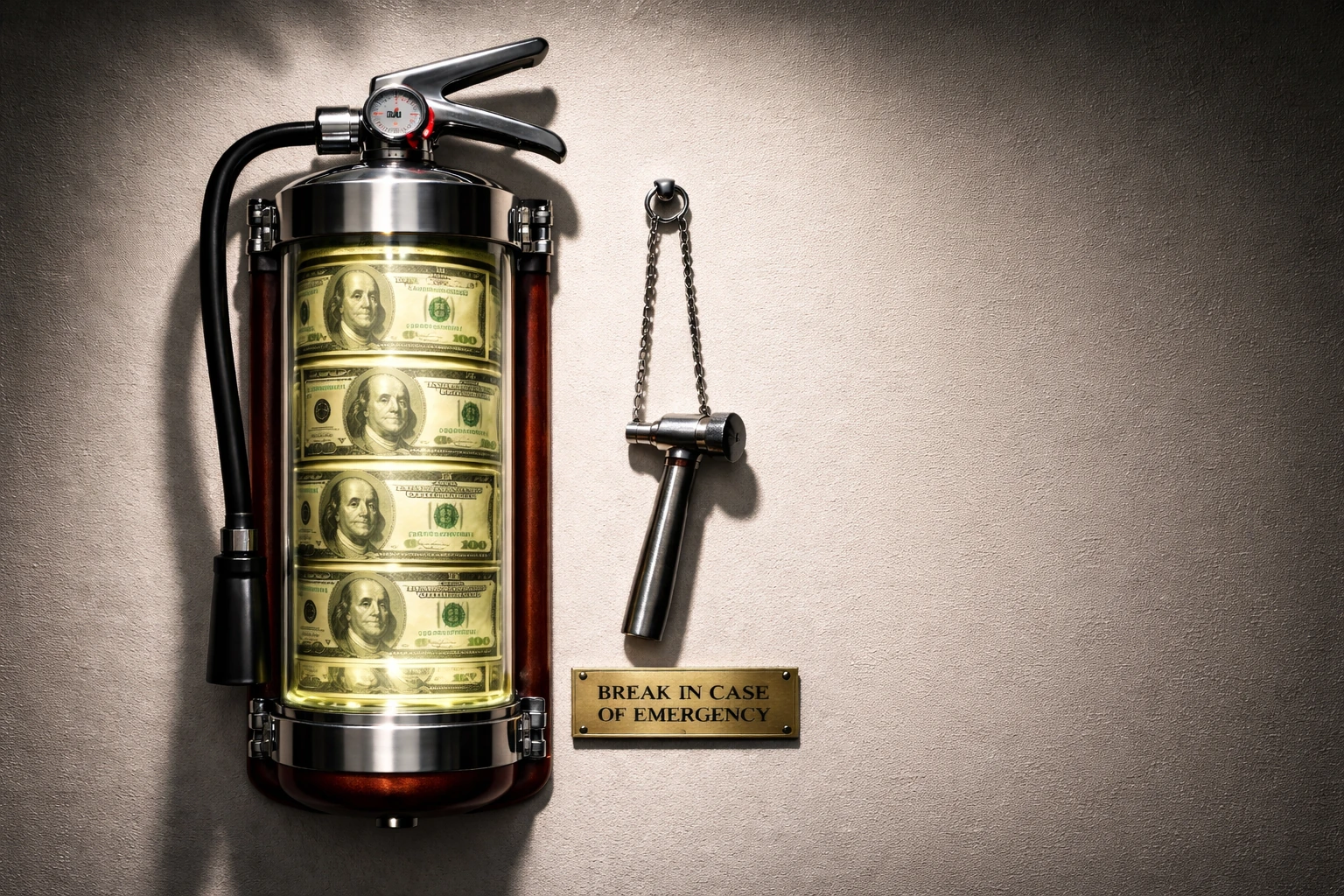
Financial gurus often preach saving “six months of your income,” a target so impossibly high it paralyzes most people from ever starting. The mathematical truth is much simpler: an emergency fund is not meant to replace your lifestyle; it is meant to prevent bankruptcy. By calculating your bare-bones survival baseline, you can realistically build a liquid cash safety net → that permanently protects you from high-interest credit card debt.
This article is for you if:
✓You rely on a credit card to cover unexpected car repairs or medical bills
✓You are overwhelmed by the idea of saving $20,000+ for emergencies
✓You want to know exactly how to calculate your 3-month survival number
CReviewed by BMT Financial Board·
Sources: Federal Reserve, CFPB · For informational purposes only
THE STARTER FUND
$1,000
The immediate cash goal that prevents 80% of minor financial disasters
BMT Baseline Matrix 2026 · Full sources → SEC 06
TARGET
3-6 Mos
Of baseline expenses
LOCATION
HYSA
Never in the stock market
Key Facts
1Calculate your goal using only essential bills (rent, food, utilities), not your gross salary
2Single-income households and freelancers require a larger 6-month buffer
3A true emergency fund should never be invested in volatile assets like index funds
Disclaimer: This article is for educational purposes only. Emergency fund needs vary based on personal risk tolerance, health conditions, and employment stability.
SEC 02PROBLEM— The Calculation Myth
SECTION 02 — THE PROBLEM
Stop Trying to Save Your Gross Salary
The biggest mistake people make is calculating their emergency fund based on their gross income. If you earn $80,000 a year, saving a 6-month buffer of $40,000 feels mathematically impossible, causing many to abandon the idea entirely. The truth is, during a severe financial emergency like a job loss, you will drastically cut discretionary spending. You do not need to save for vacations, dining out, or subscription boxes. You only need to cover your Survival Baseline: housing, basic groceries, essential utilities, transportation, and insurance.
The Amateur Approach
Trying to save 6 months of full gross income
Relying on a 29% APR credit card for “emergencies”
Investing emergency cash in the stock market for yield
Giving up because the target number is too high
The Optimized Approach
Calculating strictly based on bare-bones survival expenses
Saving a rapid $1,000 “Starter Fund” to stop immediate bleeding
Parking the cash in a secure, FDIC-insured HYSA
Building up to a realistic 3-month target over time
FINANCIAL WATCH OUT
The Credit Card Illusion. Many believe a high-limit credit card is their emergency fund. If you lose your job and put $4,000 of living expenses on a credit card at 25% APR, you are compounding your crisis. A true emergency fund pays for the disaster in cash, preventing a temporary setback from becoming permanent, crushing debt.
Source: Federal Reserve Survey of Household Economics, BMT Standard Projections
SEC 04FAQ— People Also Ask
SECTION 04 — FAQ
Frequently Asked Questions
It depends on your risk profile. A 3-month fund is sufficient if you are single, rent your home, and have highly marketable skills in a stable industry. A 6-month fund is required if you are a homeowner, have children, work as a freelancer/contractor, or are in an industry vulnerable to layoffs.
Keep it in an online High-Yield Savings Account (HYSA). It should be entirely separate from your daily checking account so you aren’t tempted to spend it, but accessible within 48 hours. Never invest this money in stocks or crypto, as the market could crash at the exact moment you lose your job.
Use a hybrid approach. First, save a $1,000 “Starter Emergency Fund” immediately to stop you from accumulating new debt when your car breaks down. Next, halt savings and aggressively pay down all high-interest toxic debt (credit cards, personal loans). Once the bad debt is gone, resume building your full 3-to-6 month safety net.
SEC 05DECISION— If/Then Framework
SECTION 05 — DECISION SUPPORT
Emergency Fund Triage Guide
Use this financial safety framework to determine exactly what your next savings target should be.
Your Situation (IF)Recommendation (THEN)
You have $0 in savings and high-interest credit card debt
You are one flat tire away from financial disaster
Save $1,000 ASAP
You have a stable dual-income household and no toxic debt
If one person loses their job, the other income acts as a buffer
Build a 3-Month Fund
You are a freelancer, contractor, or single parent
Income is variable and heavily reliant on you alone
Build a 6-Month Fund
Your fund is fully funded, but you want to save more
Too much cash loses purchasing power to inflation
Stop Saving, Start Investing
EDITOR’S COMMENT — 80% GUIDE
Do not rely on your memory or willpower to build this fund. Automate the process. Set up an automatic transfer from your checking account to your HYSA on the exact day your paycheck arrives. If you never see the money in your primary account, you will simply adjust your lifestyle to live without it.
Do not rely on your memory or willpower to build this fund. Automate the process. Set up an automatic transfer from your checking account to your HYSA on the exact day your paycheck arrives. If you never see the money in your primary account, you will simply adjust your lifestyle to live without it.