 2026 Healthcare Strategy
Medical Debt Protocol:
Slash Hospital Bills & Protect Your Credit
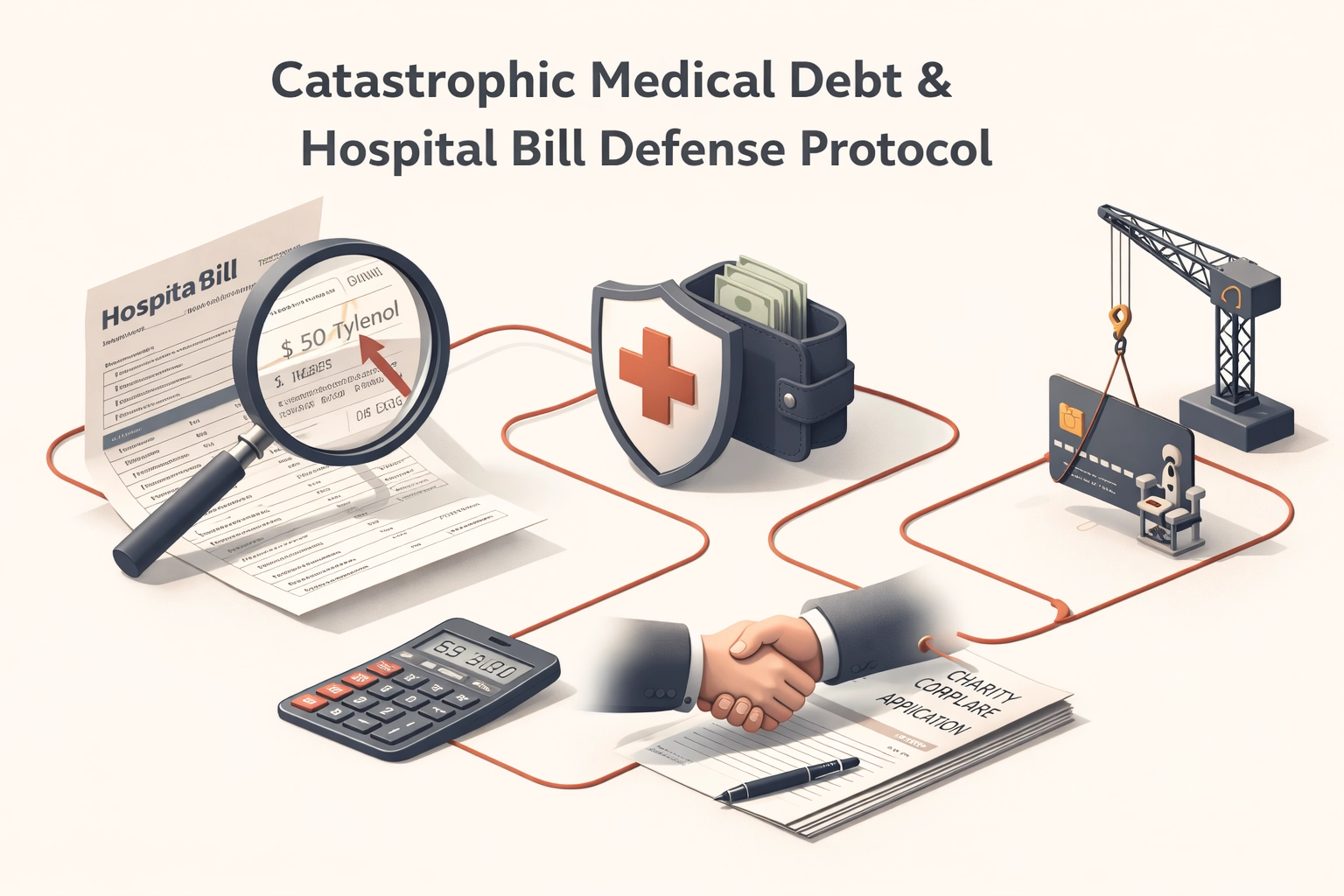
This protocol organizes the essential strategies every U.S. patient must know: how to audit hospital charges, negotiate massive bills down, and defend against aggressive medical collections.
Each guide below tackles a specific vulnerability in the healthcare billing system — from spotting $50 Tylenol upcharges on an itemized bill to invoking the No Surprises Act and fighting insurance denials.
Designed for patients fighting the system, this protocol replaces panic with a deliberate, legally grounded defense to protect your wallet and your credit score.
This protocol follows a three-phase framework used by patient advocates to dismantle medical debt: (1) Audit and legally reduce the initial hospital bill, (2) Defend your credit score and manage collection agencies, and (3) Navigate insurance appeals and extreme financial options like bankruptcy. Each section provides the exact laws and negotiation tactics needed to prevent healthcare costs from destroying your financial life.
Check your billing signals:
- Received a massive bill without an itemized breakdown? Yes
- Hit with an out-of-network “surprise” emergency charge? Yes
- Medical debt collectors calling and threatening your credit? Yes
- Health insurance unfairly denied a necessary procedure? Yes
Target Outcome
DEBT REDUCTION Eliminate Errors + Defend Your CreditBill Defense & Reduction
3 GuidesHospitals make billing mistakes constantly. Paying the first bill they send is a financial error. Always demand an itemized medical bill to spot upcoding and phantom charges. If you are uninsured or underinsured, learning how to negotiate medical bills using legally mandated charity care policies is crucial. For out-of-network emergencies, the No Surprises Act is your federal shield against illegal balance billing.
The Secret to Lowering Hospital Bills: Always Ask for an Itemized Bill
Execute GuideNot Started ART — 1402Can’t Pay Your Hospital Bill? Here is How to Negotiate It Down
Execute GuideNot Started ART — 1405Hit With a “Surprise” Medical Bill? The No Surprises Act Protects You
Execute GuideNot StartedCredit Impact & Collection Defense
3 GuidesMedical debt rules have changed in your favor. Understand exactly how medical debt affects your credit report (debts under $500 are safe). If a bill goes to collections, never reset the statute of limitations by paying a tiny amount—know your rights against medical debt collections first. Finally, be extremely cautious with financing; weigh the pros and cons of medical credit cards like CareCredit to avoid deadly deferred interest traps.
New Rules: How Unpaid Medical Bills Actually Affect Your Credit Score
Execute GuideNot Started ART — 1408Medical Debt in Collections? Know Your Rights Before You Pay a Dime
Execute GuideNot Started ART — 1403Medical Credit Cards (Like CareCredit): A Lifeline or a Debt Trap?
Execute GuideNot StartedInsurance Appeals & Final Options
3 Guides“Claim Denied” is not the final answer. Insurance companies rely on patients giving up. You must learn how to strategically appeal a health insurance denial. If you have an HSA, make sure you are fully utilizing HSA qualified medical expenses to pay tax-free. However, if the hospital bills are truly catastrophic and destroying your financial life, understanding the reality of medical bankruptcy is the ultimate reset button.
Insurance Denied Your Claim? Here is the Step-by-Step Appeal Strategy
Execute GuideNot Started ART — 1407The HSA Hack: Paying for Dental, Vision, and Meds Completely Tax-Free
Execute GuideNot Started ART — 1409Medical Bankruptcy: When Wiping the Slate Clean is the Only Option
Execute GuideNot Started- Paying without an itemized breakdown
- Putting medical debt on a credit card
- Ignoring collection validation rights
- Resetting the statute of limitations with $1