Medical Debt in Collections? Know
Your Rights Before You Pay a Dime
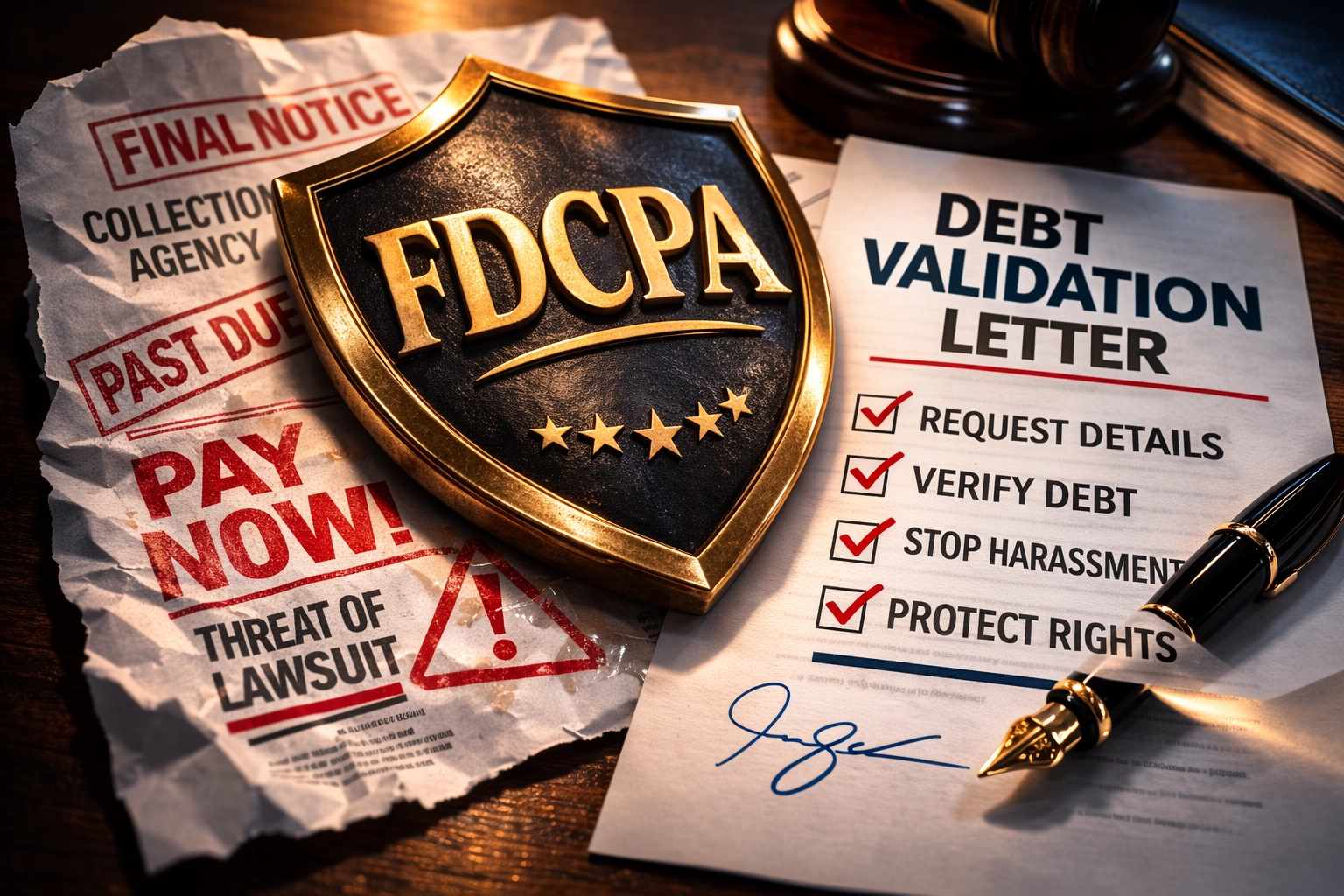
Receiving a call from a medical debt collector is designed to be a terrifying experience. They use urgency and aggressive tactics to force you into making a payment over the phone. However, debt collectors have virtually no real power over you if you understand federal law. Under the Fair Debt Collection Practices Act (FDCPA), you have the right to demand written proof of the debt and halt their harassment. If you make a panic payment of even $1, you might accidentally revive a dead “Zombie Debt” and reset the legal clock, allowing them to sue you. Here is the exact defensive strategy → to handle medical collections safely.
This article is for you if:
✓You are receiving harassing phone calls or letters from a third-party debt collector
✓A collector is asking you to pay a medical bill that is several years old
✓You want to know how to write a Debt Validation Letter to stop collection efforts
LReviewed by BMT Legal & Compliance·
Sources: CFPB, FDCPA · For informational purposes only
THE LEGAL SHIELD
30 Days
Your federal window to request a Debt Validation Letter
FDCPA Guidelines · Full sources → SEC 06
STATUTE
3-6 Yrs
State limit to sue for debt
BUY RATE
~4¢
Price paid per $1 of debt
Key Legal Facts
1The Validation Right: You can legally force the collector to prove you actually owe the money.
2The Reset Trap: Making a partial payment or acknowledging the debt resets the statute of limitations.
3Harassment Ban: Under the FDCPA, collectors cannot threaten arrest or call you at work if told to stop.
Disclaimer: This article provides legal frameworks for dealing with debt collectors under the FDCPA. It is not legal advice. The Statute of Limitations for medical debt varies significantly by state. Consult a consumer rights attorney regarding lawsuits, wage garnishments, or specific debt laws in your state.
SEC 02PROBLEM— The Zombie Debt Trap
SECTION 02 — THE PROBLEM
Do Not Pay $1. Do Not Admit Anything.
When a hospital gives up on collecting a bill, they package it with thousands of others and sell it to a third-party debt buyer for pennies on the dollar. The collector calling you likely bought your $1,000 medical bill for $40. They just need to extract $100 from you to make a profit.
Here is the trap: Every state has a Statute of Limitations (SOL) on written contracts, typically between 3 to 6 years. Once that time passes, the debt is “time-barred.” The collector can still legally ask you to pay, but they cannot legally sue you or garnish your wages. However, if they pressure you into making a “good faith” payment of even $1, or if you verbally say “I know I owe it, I just don’t have the money,” the clock resets to zero. You have just revived a dead debt, and they can now drag you to court.
The Wrong Reaction
Answering the phone and apologizing for the unpaid bill
Making a small $20 payment to “get them off your back”
Believing a collector who threatens to have you arrested
Ignoring court summons if the collector actually sues you
The FDCPA Defense
Stating firmly: “I dispute this debt. Do not contact me by phone.”
Sending a Debt Validation Letter within 30 days of first contact
Checking your state’s Statute of Limitations before negotiating
Reporting aggressive, illegal threats to the CFPB immediately
LEGAL WATCH OUT
Credit Report vs. Statute of Limitations. These are two different clocks. Medical debt can stay on your credit report for 7 years (subject to new CFPB rules), but the Statute of Limitations to sue you might only be 3 years. A debt can fall off your credit report but still be legally collectible, or vice versa. Always check your state’s SOL for “written contracts.”
SEC 03EVIDENCE— Data + Sources (E-E-A-T)
SECTION 03 — EVIDENCE & DATA
The Economics of Collection
Debt buying arbitrage (Why they will accept massive discounts)
Negotiation PowerHigh
Collecting without providing a Validation Letter
Using profane language, threatening arrest or violence
Contacting the consumer at an inconvenient time or workplace
CFPB DataIllegal Acts
Source: Consumer Financial Protection Bureau (CFPB) Annual FDCPA Report
SEC 04FAQ— Legal Mechanics
SECTION 04 — FAQ
Frequently Asked Questions
Within 5 days of contacting you, a collector must send a written notice detailing the debt. You then have 30 days to send a “Debt Validation Letter” back, formally disputing the debt and demanding proof (original itemized bills, proof they own the debt). Once they receive your letter, federal law requires them to stop all collection efforts until they mail you the proof. Often, they can’t find the paperwork and just give up.
Yes, but ONLY if they sue you in court and a judge issues a judgment against you. They cannot simply reach into your paycheck because they feel like it. This is why checking the Statute of Limitations is crucial; if the debt is too old, they legally cannot win a judgment against you.
Under the FDCPA, simply tell them, “My employer does not allow me to receive these calls. Cease and desist calling my workplace.” If they call your workplace again, they are violating federal law and can be fined up to $1,000 per violation if you report them to the CFPB.
SEC 05DECISION— If/Then Framework
SECTION 05 — DECISION SUPPORT
The Debt Collector Triage Matrix
Use this action framework the moment a debt collector contacts you about an unpaid medical bill.
Your Situation (IF)Recommendation (THEN)
A collector calls you for the very first time
The 30-day federal window has just opened
Say: “Send everything in writing.” Hang up.
You receive the written collection notice in the mail
You must establish a paper trail immediately
Send a Debt Validation Letter via Certified Mail
The debt is valid, but past your state’s Statute of Limitations
They cannot sue you, but they can annoy you
Send a “Cease and Desist” Letter to halt all contact
The debt is valid, within the SOL, and they verified it
You are legally liable and face lawsuit risk
Negotiate a 30% Lump-Sum Cash Settlement
LEGAL COMMENT — 80% GUIDE
Never give a debt collector your primary checking account information. If you agree to a $300 settlement on a $1,000 debt, get the agreement in writing stating “paid in full.” Then, pay them using a cashier’s check or a prepaid debit card. Unscrupulous collectors have been known to “accidentally” drain a checking account for the full $1,000 once they have the routing number.
Never give a debt collector your primary checking account information. If you agree to a $300 settlement on a $1,000 debt, get the agreement in writing stating “paid in full.” Then, pay them using a cashier’s check or a prepaid debit card. Unscrupulous collectors have been known to “accidentally” drain a checking account for the full $1,000 once they have the routing number.