Executive Summary
Student Loan Debt Management is a capital allocation decision that dictates long-term household liquidity, dictating whether to leverage federal protections, pursue tax-free forgiveness, or aggressively refinance for interest reduction.
In 2026, the US student loan landscape is defined by a deep bifurcation between federal safety nets and private market efficiency. The implementation of the SAVE plan and strict structural requirements for Public Service Loan Forgiveness (PSLF) mean that the traditional "pay it off as fast as possible" advice is mathematically flawed for millions of borrowers. Understanding the difference between federal and private student loans is the absolute prerequisite before executing any repayment strategy.
For borrowers in public service or non-profit sectors, the PSLF requirements offer a highly lucrative, tax-free exit strategy after 120 qualifying payments. For high-income earners with private loans or federal loans where forgiveness is mathematically impossible, student loan refinancing to a lower private rate is the optimal path. However, executing this maneuver on federal loans permanently strips the borrower of income-driven protections.
Furthermore, the tax code provides unique leverage points. Utilizing the student loan interest deduction limit and executing the SECURE 2.0 529 plan hack can shield thousands of dollars from federal taxation annually.
Strategic Position: The default protocol is to retain federal loans within an Income-Driven Repayment (IDR) plan to preserve liquidity and optionality, reserving aggressive private refinancing exclusively for private loans or mathematically verified high-income/low-balance federal scenarios.
Structural Background
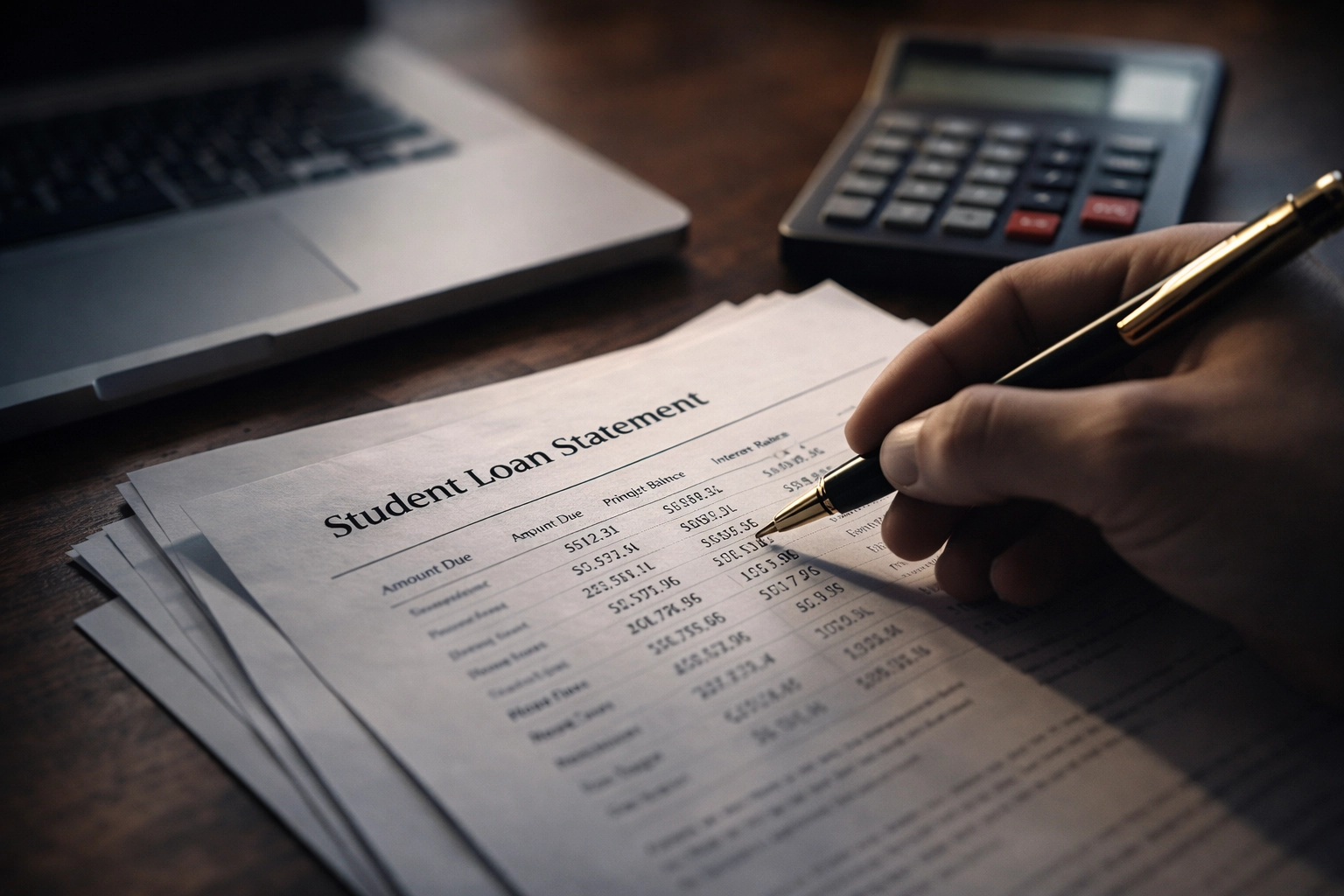
The total outstanding US student loan debt exceeds $1.7 trillion in 2026, representing the second-largest consumer debt category after mortgages. The market mechanics and federal policies governing this debt have shifted dramatically, rendering pre-2020 repayment advice obsolete.
The IDR Revolution: The SAVE Plan
The introduction of the Saving on a Valuable Education (SAVE) plan fundamentally altered the math of student debt. By increasing the poverty exemption threshold and eliminating unpaid interest capitalization, the federal government effectively created a zero-interest loan for borrowers whose calculated payments do not cover the monthly interest accrual. This makes keeping federal loans often more profitable than paying them off aggressively.
When you refinance a federal loan with a private lender (e.g., SoFi, Earnest) to lower your APR, the new loan is strictly private. You permanently lose access to the SAVE plan, PSLF, and federal forbearance. This is a one-way transaction with zero recourse.
The "Tax Bomb" and State Variables
While PSLF provides tax-free forgiveness, standard IDR forgiveness (achieved after 20-25 years of payments) may be treated as taxable income by the IRS depending on current legislation extensions. This impending student loan forgiveness tax bomb requires long-term capital provisioning, especially considering state-level tax treatments.
Core Drivers
Driver 1: The Federal Safety Net vs. Private Optimization
Borrowers must continuously weigh the insurance value of federal loans against the interest savings of private refinancing. Federal loans offer inherent death and disability discharge, economic hardship deferment, and IDR frameworks. Private loans offer one distinct advantage: a lower Annual Percentage Rate (APR) for highly qualified borrowers.
For those with existing private loans or parent PLUS loans, securing a cosigner release or refinancing is critical to severing liability ties and reducing total interest accrual.
Driver 2: The "Invest vs. Pay Off" Threshold
The decision to aggressively pay down debt or invest surplus capital is dictated by the interest rate arbitrage. Historically, the S&P 500 yields an inflation-adjusted return of ~7%. If a student loan carries a fixed rate of < 5%, mathematically, capital is better deployed into tax-advantaged retirement accounts.
Fig 2. The Cost of Capital: Paying off a 4% loan aggressively while ignoring a 401(k) match or market returns mathematically destroys long-term net worth. (For the full mathematical breakdown, consult our Investing vs Paying Off Student Loans analysis.)
Over-allocating to low-interest debt effectively starves your investment portfolio of compound growth. Re-evaluating this threshold annually as market conditions change is a core component of sustainable wealth generation.
Driver 3: Tax Code Arbitrage (Section 221 & 529s)
The IRS allows up to $2,500 in student loan interest to be deducted annually as an "above-the-line" adjustment to income, subject to Modified Adjusted Gross Income (MAGI) phase-outs. Additionally, the SECURE 2.0 Act enables borrowers to use up to $10,000 from a 529 plan to pay down qualified student loans without incurring standard non-educational withdrawal penalties—effectively allowing debt to be paid with pre-tax growth dollars.
Data Deep Dive
Scenario Analysis: 10-Year Trajectory on $80,000 Federal Loan Balance
Assumptions: Borrower AGI $75,000 (3% annual growth). Federal Rate 6.5%. Refinance Rate 4.5%. Single Tax Filer.
Fig 3. Repayment Strategy Trajectories: The IDR (SAVE) line preserves immediate cash flow but extends the horizon. Aggressive Refinancing zeroes the balance in 7 years but requires intense monthly capital commitment.
| Repayment Strategy | Standard (10-Yr) | IDR - SAVE Plan | Private Refinance (7-Yr) |
|---|---|---|---|
| Interest Rate | 6.50% | 6.50% (Subsidized) | 4.50% |
| Initial Monthly Payment | $908 | ~$350 (Income Based) | $1,111 |
| Total Out-of-Pocket | $108,960 | ~$85,000 (Over 20 yrs) | $93,324 |
| Forgiveness Potential | $0 | Yes (After 20 Yrs) | $0 |
| Federal Protections | Retained | Retained | Forfeited |
Calculation Methodology: Projections utilize standard amortization models. SAVE plan payments are estimated dynamically based on 225% of the federal poverty guideline. "Total Out-of-Pocket" under SAVE assumes income growth and eventual taxable forgiveness.
The Invest vs. Payoff Calculator Matrix
Determine the mathematical viability of accelerating loan payments versus investing surplus capital.
(Loan APR) - (Tax Deduction Benefit)
= Effective APR (%)
(Expected Portfolio Return: ~7%) - (Effective APR)
= Yield Delta
*Note: If Yield Delta is positive (> 0%), mathematics favor investing the surplus. If negative, accelerate debt payoff. Psychological risk tolerance is not factored into this calculation.
Decision Protocol Matrix
Select your profile below to identify the mathematically optimal acquisition strategy.
| Profile / Scenario | Recommended Strategy | Rationale & Exceptions |
|---|---|---|
| Government / Non-Profit 501(c)(3) Employee, Any Income |
PSLF + IDR (SAVE) | 100% tax-free forgiveness after 120 payments. Pay the absolute minimum required. Never refinance privately. |
| High-Income Private Sector Tech, Med, Law (Low Debt-to-Income) |
Private Refinance | Federal protections hold no value if your calculated IDR payment exceeds the standard 10-year payment. Secure lowest private APR. |
| Moderate Income / High Debt Debt > 1.5x Annual Income |
Federal SAVE Plan | Leverages the unpaid interest subsidy. Prevents balance explosion while awaiting 20-25 year forgiveness timeline. |
| Parent PLUS Borrower Nearing Retirement |
Double Consolidation / Release | Standard IDR options are limited. Must execute ICR loophole or attempt cosigner release to protect retirement assets. |
Risk Map
Mechanism: Transferring a Federal Direct Loan to a private lender (e.g., Earnest, SoFi) permanently eliminates all federal safety nets, including PSLF eligibility and death discharge.
Mechanism: While PSLF is federally tax-free, standard IDR forgiveness (at 20-25 years) may be taxed as ordinary income at the federal or state level, triggering a massive unexpected IRS bill.
Mechanism: Parents or relatives who cosigned private loans remain legally responsible for the debt. Late payments by the primary borrower will instantly damage the cosigner's credit score.
Mechanism: Aggressively overpaying low-interest student loans (< 4%) instead of contributing to a 401(k) with an employer match mathematically destroys wealth-building velocity.
Strategic Playbook

Execution Protocol: Step-by-Step Debt Management Framework
Log into StudentAid.gov. Download your National Student Loan Data System (NSLDS) file. Segregate your debt: Federal Direct, FFEL (needs consolidation), and Private Loans. Pull your credit report to identify any orphaned private accounts.
If employed by a 501(c)(3) or government, immediately submit the PSLF Employment Certification Form. Run the Federal Loan Simulator to determine if the SAVE plan yields a lower payment than your current tier.
If you have private loans (or high-income federal loans with no forgiveness path), shop rates across 3-4 lenders (Credible, Earnest, SoFi) simultaneously. At tax time, ensure your CPA or tax software logs Form 1098-E to claim the $2,500 interest deduction.
Frequently Asked Questions
Federal loans are funded by the US government, offering strict legal protections like Income-Driven Repayment (IDR), forgiveness programs (PSLF), and discharge upon death. Private loans are issued by banks, lack standard forgiveness options, and require strict adherence to the contract terms regardless of income drops. (Deep dive: Federal vs Private Loans.)
To qualify for Public Service Loan Forgiveness, you must: 1) Work full-time for a US federal, state, local, or tribal government, or a qualifying non-profit; 2) Have Direct Loans; 3) Be enrolled in an IDR plan; and 4) Make 120 qualifying monthly payments. (Verify your status using our PSLF Requirements Guide.)
Yes, if eligible. Under the SECURE 2.0 Act, you can withdraw up to a $10,000 lifetime limit from a 529 plan to pay qualified student loans without tax penalties. This is an excellent way to use leftover educational funds. (See the 529 Plan Hack.)
It depends. PSLF is completely tax-free at the federal level. However, forgiveness achieved through standard 20-25 year IDR plans is generally considered taxable income by the IRS, unless current legislative exemptions are extended or you qualify for insolvency. Certain states also tax forgiveness. (Review your exposure: The Tax Bomb Warning.)
You can deduct up to $2,500 of interest paid on qualified student loans as an adjustment to income on your federal return. You do not need to itemize deductions to claim this. However, it phases out based on your Modified Adjusted Gross Income (MAGI). You will need Form 1098-E from your servicer. (See Interest Deduction Limits.)
Most private lenders require 12-36 months of consecutive on-time payments, proof of sufficient independent income, and a strong credit score (typically 700+) to approve a release. If they deny it, your only other option is to refinance the loan solely in your name. (Process details: Cosigner Release Guide.)
Data Sources & References
- [1] Federal Student Aid — Income-Driven Repayment (IDR) Plans
- [2] IRS — Topic No. 456, Student Loan Interest Deduction
- [3] CFPB — Paying for College: Repay Student Debt
- [4] Federal Reserve (FRED) — Student Loans Owned and Securitized