Low Score? secured credit cards for
bad credit 2026 Top 3
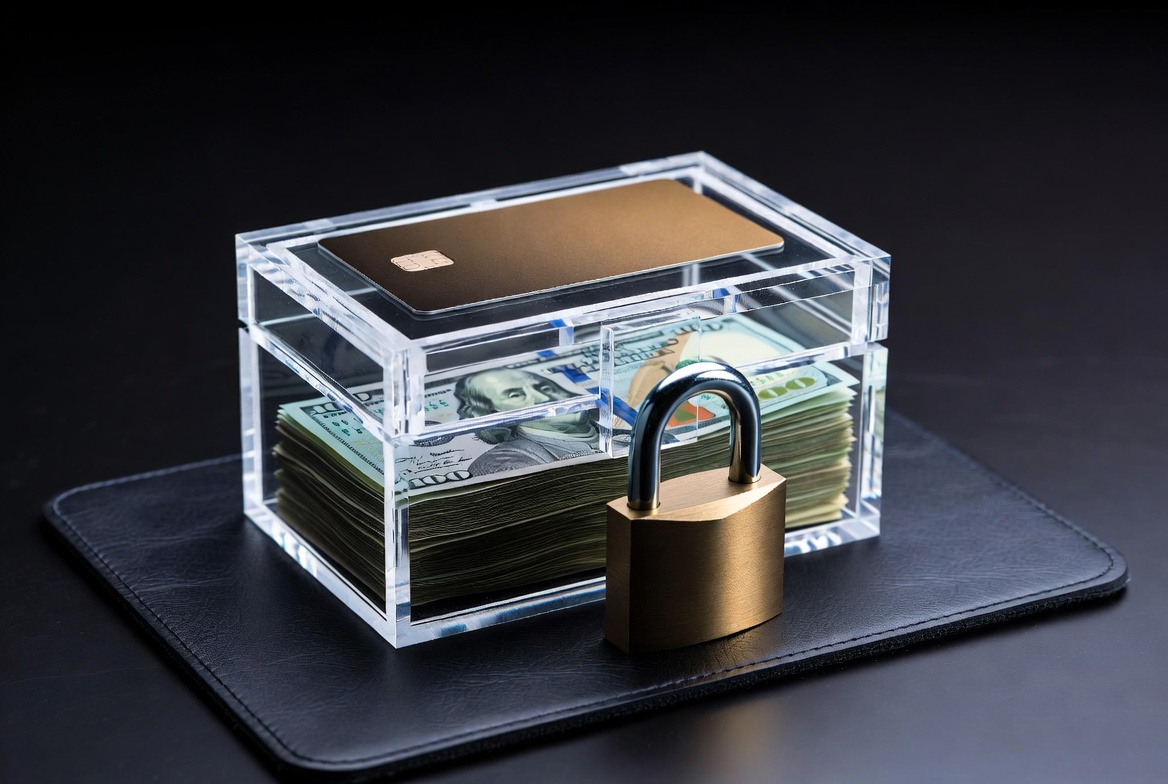
When your FICO score drops into the subprime tier (below 620) due to missed payments or a bankruptcy, you are algorithmically quarantined by the banking system. Applying for standard unsecured credit cards will result in automatic rejections, which generate “hard inquiries” that drop your score even further. To break this destructive cycle, you must eliminate the bank’s unsecured risk. A Secured Credit Card requires you to put down a refundable cash deposit (e.g., $200) that acts as collateral. Because the bank holds your cash, your approval is virtually guaranteed. This allows you to forcefully inject positive payment history back into your credit file. Here is the commercial blueprint on selecting the top secured credit cards for bad credit →, bypassing predatory fees, and graduating back to prime lending status in 2026.
This article is for you if:
✓Your credit score is below 620 and you are consistently rejected for new accounts
✓You need a guaranteed mathematical tool to rebuild positive payment history
✓You want to avoid subprime credit cards that charge massive non-refundable setup fees
RReviewed by BMT Credit Desk·
Sources: CFPB, FICO · Commercial Guide
THE COLLATERAL
$200 Min
Standard refundable deposit to secure your credit line
Banking Analytics · Full sources → SEC 06
APPROVAL
Near 100%
Because the bank holds your cash
GRADUATION
6 to 12 Mos
Time to get your deposit back
Key Execution Facts
1Put down a refundable cash deposit.
2Keep your credit utilization below 10%.
3Avoid cards with monthly maintenance fees.
Disclaimer: This article reviews commercial credit products based on 2026 data. BMT is not affiliated with Discover or Capital One. A secured card requires discipline; if you miss payments, the bank will seize your cash deposit to cover the debt, and your credit score will drop further.
SEC 02PROBLEM— The Subprime Rejection Loop
SECTION 02 — THE PROBLEM
Unsecured Applications Destroy Your File
When consumers realize their credit score is heavily damaged, their instinct is often to frantically apply for multiple standard credit cards hoping one will slip through the algorithm. This is a fatal administrative error. Every time you apply for an unsecured credit card, the bank initiates a “Hard Inquiry” on your credit report. If you have a 580 score, the bank will automatically reject you, but the hard inquiry remains on your file, dropping your score by another 2 to 5 points. Applying for five cards in one weekend can artificially crash your score even deeper into the subprime tier.
To bypass this algorithmic wall, you must fundamentally change the nature of the loan. A Secured Credit Card is mathematically identical to a standard card, except it requires a security deposit. If you deposit $200 with the bank, they issue you a credit card with a strict $200 limit. To the credit bureaus (Equifax, Experian, TransUnion), this looks and acts exactly like a normal credit card. Every month you pay your bill on time, positive data is injected into your FICO file. You are essentially using your own liquid cash to buy your way back into the prime banking ecosystem.
The Subprime Victim
Applies for 4 standard credit cards online and is rejected by all of them
Loses 15 points on their FICO score purely from the hard inquiries
Gets lured into a “Bad Credit” unsecured card that charges a $99 setup fee
Remains locked out of the prime lending market for years
The Credit Rebuilder
Stops applying for standard cards and opens a single Secured Card with a $200 deposit
Uses the card for one small purchase a month (e.g., Netflix) and auto-pays the balance
Generates 6 months of flawless payment history, rapidly boosting their FICO score
“Graduates” to an unsecured card and gets their original $200 deposit fully refunded
PREDATORY WATCH OUT
The “Fee Harvester” Trap. Many shady financial institutions prey on desperate consumers by offering “Unsecured Cards for Bad Credit.” They do not require a deposit, but they charge a $99 processing fee, a $50 annual fee, and a $10 monthly maintenance fee. You are mathematically losing money every month. A true secured card from a major bank has zero hidden fees—you simply park your refundable deposit.
SEC 03EVIDENCE— Data + Sources (E-E-A-T)
SECTION 03 — EVIDENCE & DATA
The Rebuilding Trajectory
Estimated FICO 8 score progression with pristine usage
The StrategyTime & Math
Collateral required to secure the credit line
Unrecoverable fees you must avoid
The AssetRefundable
Source: Fair Isaac Corporation (FICO) Credit Restoration Models, Consumer Financial Protection Bureau (CFPB)
SEC 04FAQ— Secured Mechanics
SECTION 04 — FAQ
Frequently Asked Questions
Top-tier banks (like Discover) automatically review your account after 6 to 8 months of on-time payments. If your credit score has improved sufficiently, they will “graduate” you to an unsecured card. They will mail you a check for your original deposit (e.g., $200) or apply it as a statement credit, and your credit limit will usually be increased simultaneously.
To maximize your FICO score growth, you must keep your Credit Utilization Ratio below 10%. If your limit is $200, you should never have a statement balance higher than $20. The smartest tactic is to use the card for a single small recurring subscription (like Spotify), set the card to auto-pay the full balance from your checking account, and put the physical card in a drawer.
No. The FICO algorithm and future lenders viewing your credit report will simply see a standard revolving credit account. It carries the exact same mathematical weight for building positive payment history as an ultra-premium elite credit card.
SEC 05DECISION— If/Then Framework
SECTION 05 — DECISION SUPPORT
The Subprime Escape Matrix
Use this tactical framework to deploy the correct collateralized instrument based on your available cash flow.
Your Situation (IF)Recommendation (THEN)
You have $200 in cash and want to earn rewards while rebuilding your credit
Most secured cards offer zero cash back
Open the Discover it Secured Credit Card. It is the premier option because it offers 2% cash back at gas stations and restaurants, with zero annual fee.
You need to rebuild your score but only have $50 of liquid cash available for a deposit
High collateral requirements can block low-income individuals
Apply for the Capital One Platinum Secured. Depending on your credit profile, they may issue you a $200 credit line for a deposit as low as $49.
You recently filed for bankruptcy and even major secured cards are rejecting you
Some banks still run hard credit checks for secured cards
Use the Open Sky Secured Visa. They do not run a credit check at all for approval. Your cash deposit is the sole deciding factor.
You receive a mail offer for an unsecured card with a $500 limit and a $99 processing fee
Shred the letter immediately. These fee-harvester cards will bleed your cash flow dry. A refundable $200 deposit is always mathematically superior to a $99 sunk cost.
CPA COMMENT — 80% GUIDE
Do not close your secured card immediately after your score improves. Wait for the bank to naturally graduate the account to an unsecured line and return your deposit. Leaving the account open anchors your “Length of Credit History,” which accounts for 15% of your total FICO score.
Consumer Financial Protection Bureau (CFPB) — Understanding Secured Credit Cards and Rebuilding Credit(2026) · consumerfinance.gov
2
Fair Isaac Corporation (FICO) — Payment History and Credit Utilization Weighting(2026) · myfico.com
Sources are cited for informational purposes. BMT is not sponsored by Discover, Capital One, or Citi. Approval criteria and minimum deposit requirements vary by institution and are subject to change. Always verify the terms and conditions before transferring funds.
Do not close your secured card immediately after your score improves. Wait for the bank to naturally graduate the account to an unsecured line and return your deposit. Leaving the account open anchors your “Length of Credit History,” which accounts for 15% of your total FICO score.