Quarterly Estimated Taxes: Do You Really Need to Pay 4 Times a Year?
The US tax system is “pay-as-you-go.” If you have a regular job, your boss pays the IRS for you every two weeks. But if you are a freelancer or gig worker, no one is paying for you. If you wait until April 15th to pay your entire tax bill, the IRS will slap you with an Underpayment Penalty. To avoid this, you must make 4 “Estimated Payments” throughout the year. Here is the weird calendar and the cheat code to calculate exactly what you owe.

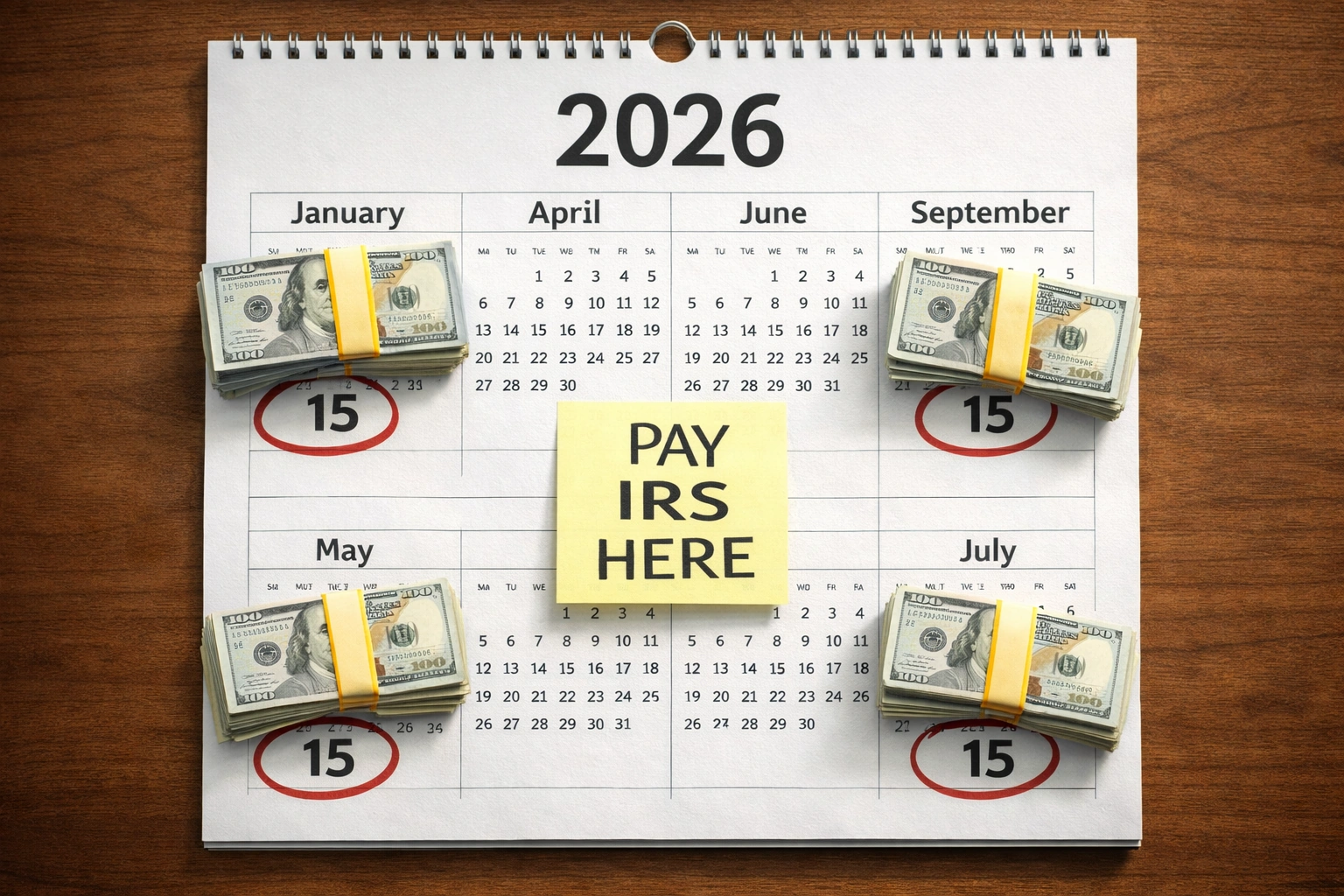
The 4 Critical Dates: Unlike rent (monthly), taxes are quarterly. But watch out—the gap between April 15 and June 15 is only 2 months. Missing this short window is the #1 cause of penalties.
Image Source: bestmoneytip.com
1. Do I Need to Pay? (The $1,000 Test)
Not every side hustler needs to do this. You only need to worry if you will owe the IRS significant money.
- You expect to owe less than $1,000 in total tax (after subtracting withholding).
- Or, your W-2 job withholds enough to cover your side hustle tax.
- You expect to owe $1,000 or more.
- Example: You profit $5,000 from freelancing? You owe ~$750 (SE Tax) + Income Tax. You are close to the limit.
- Example: You profit $10,000? You definitely owe >$1,500. Start paying quarterly.
2. The Weird Calendar: It’s Not Every 3 Months
The IRS quarters are uneven. The biggest trap is Quarter 2, which is only 2 months long (April & May), yet the bill is due June 15th.
| Payment Period | Months Included | Due Date | Warning |
|---|---|---|---|
| Quarter 1 | Jan, Feb, Mar (3 Mos) | April 15 | Same day as tax day |
| Quarter 2 | Apr, May (2 Mos) | June 15 | Only 2 months later! |
| Quarter 3 | Jun, Jul, Aug (3 Mos) | Sept 15 | Summer income due |
| Quarter 4 | Sep, Oct, Nov, Dec (4 Mos) | Jan 15 (Next Year) | Longest period |
3. How Much? Use the “Safe Harbor” Rule
Calculating your exact profit every quarter is a nightmare. The IRS gives you two safe options to avoid penalties.
*High Earners (AGI >$150k): You must pay 110%.
*Risk: If you calculate wrong and pay less than 90%, you get penalized. Option A is safer.
Example Calculation (Option A)
This year (2026): You are making way more money. You might owe $10,000.
Safe Harbor Move: Pay $1,000 per quarter ($4,000 ÷ 4).
Result: You are “Safe.” You will owe the remaining $6,000 next April, but you will pay $0 in penalties.
4. How to Pay (Don’t Mail Checks)
The easiest way is online. It takes 2 minutes.
- Go to IRS Direct Pay (Official site).
- Select Reason: “Estimated Tax”.
- Select Form: “1040-ES”.
- Select Year: “2026” (Always select the current tax year).
- Enter your info and pay via Bank Account (Free). Keep the confirmation number!
5. What If I Missed a Deadline?
Did you miss the June 15th deadline? Don’t panic.
- The Penalty: It is essentially an interest charge (currently around 7% per year) on the amount you were late paying.
- The Fix: Pay it now. The penalty is calculated based on the number of days you are late. Paying in July is cheaper than waiting until September.
- Don’t wait until April: The longer you wait, the higher the interest grows.
6. The Best Strategy: The “Tax Vault” Allocation
Don’t rely on willpower. Treat your income like a pie chart from Day 1.
When the quarterly due date arrives, simply empty the Red Zone (“Tax Vault”) and send it to the IRS.