Advanced Tax Brief: CODI Risk
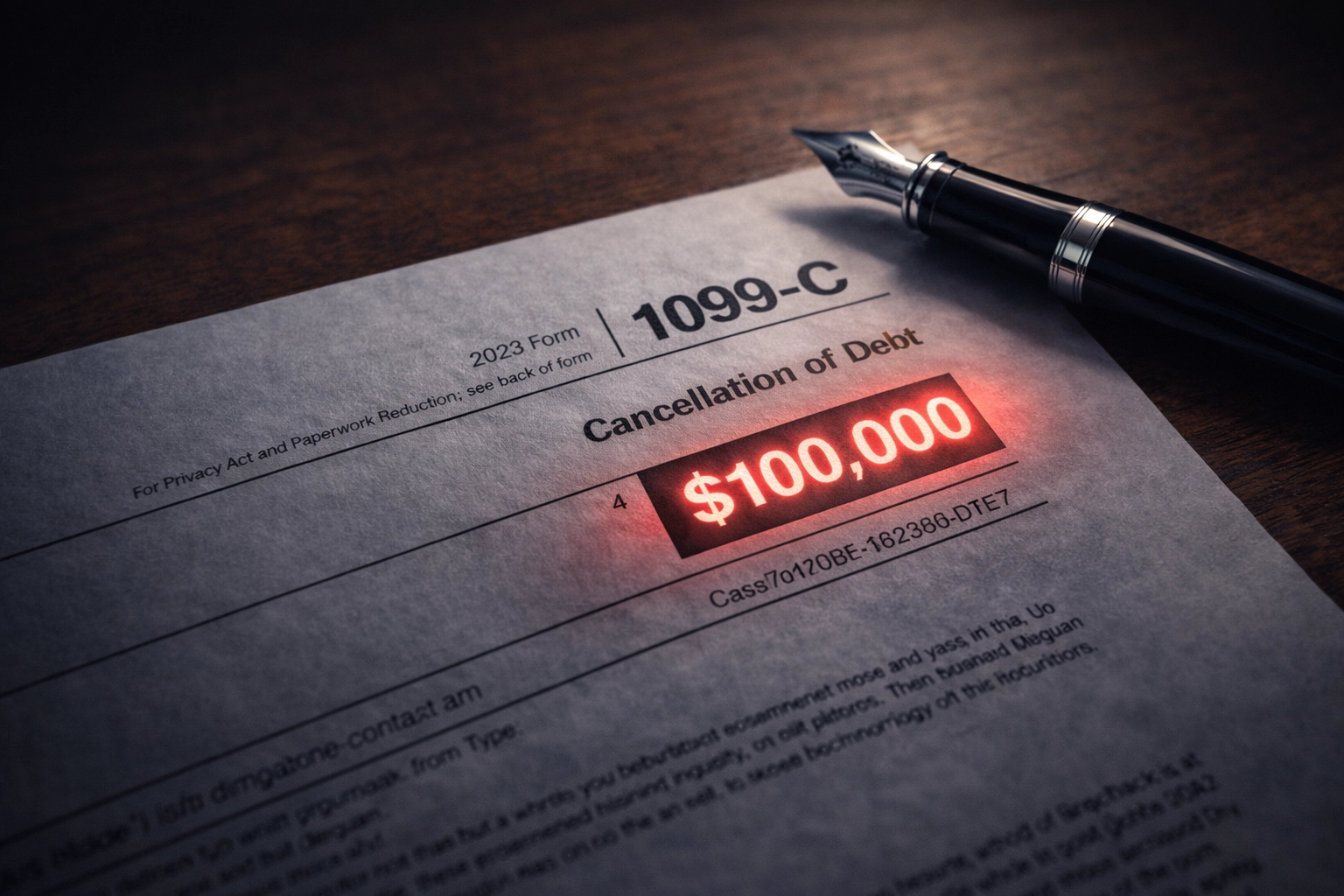
In the eyes of the IRS, forgiven debt is treated as earned income. If you reach the end of a 20- or 25-year Income-Driven Repayment (IDR) plan and have $100,000 forgiven, the federal government may tax that amount exactly as if your employer paid you a $100,000 cash bonus. This resulting tax liability is known in wealth management as the “Student Loan Tax Bomb.” Preparing for it requires a multi-year liquidity strategy and a deep understanding of the IRS insolvency exception.
There is a dangerous illusion in the student loan system that forgiveness equates to freedom. For many borrowers, wiping out a massive debt balance merely transfers the liability from the Department of Education to the Internal Revenue Service (IRS). Under Section 108 of the Internal Revenue Code, Cancellation of Debt Income (CODI) is fully taxable at your marginal tax rate.
If you made the strategic decision to invest rather than pay off your loans, relying on eventual IDR forgiveness, you must now structure your balance sheet to absorb this targeted tax event. You are not waiting for a miracle; you are waiting for a tax bill.
The Disconnect: Federal vs. State Tax Codes
The taxability of your forgiven loan depends entirely on the specific program you are enrolled in, the year the forgiveness occurs, and the state in which you file your taxes.
- The PSLF Exemption: As detailed in our PSLF Golden Ticket guide, Public Service Loan Forgiveness is permanently tax-free at the federal level. It is the gold standard of forgiveness.
- The ARPA Temporary Shield: The American Rescue Plan Act (ARPA) of 2021 temporarily made all student loan forgiveness federal tax-free. However, this provision is scheduled to expire on December 31, 2025. Unless Congress permanently extends it, the federal tax bomb returns in 2026.
- State-Level Taxation: The IRS does not control your state’s Department of Revenue. Several states (such as Mississippi, Indiana, North Carolina, and Arkansas) do not conform to federal tax shields. If you live in a non-conforming state, you will be hit with a state income tax bill on your forgiven balance, regardless of federal laws.
*If the ARPA provision expires, a borrower earning $85,000 who has $100,000 forgiven will suddenly be taxed as if they earned $185,000 that year, potentially pushing them into a higher marginal tax bracket.
The Advanced CPA Shield: The Insolvency Exception
If the tax bomb hits you, there is a legal defense mechanism. The IRS recognizes that taxing a broke person is inefficient. Enter IRS Form 982: Reduction of Tax Attributes Due to Discharge of Indebtedness.
If you are technically “insolvent” immediately before the debt is forgiven, you can exclude the canceled debt from your taxable income. Insolvency is a strict mathematical test: Total Liabilities must exceed Total Fair Market Value of Assets.
| Total Assets (Fair Market Value) | Total Liabilities (Debt) |
|---|---|
| Checking/Savings: $5,000 | Student Loan to be Forgiven: $100,000 |
| Retirement Accounts (401k/IRA): $40,000 | Auto Loan Balance: $15,000 |
| Used Car Value: $10,000 | Credit Card Debt: $5,000 |
| Total Assets: $55,000 | Total Liabilities: $120,000 |
Result: In this scenario, liabilities exceed assets by $65,000. You are insolvent by $65,000. Therefore, you can legally exclude $65,000 of the forgiven student loan from your taxable income. You would only owe taxes on the remaining $35,000.

Actionable Execution: The Sinking Fund Strategy
You cannot rely on the insolvency exception alone, as aggressive investors will likely build significant assets over a 20-year IDR timeline. Instead, you must engineer a “Sinking Fund.”
How to Disarm the Tax Bomb
- Forecast the Liability: Project your estimated loan balance at year 20. Multiply that number by your estimated future marginal tax rate (e.g., 25% to 30%). This is your target liability.
- Open a Dedicated Brokerage Account: Do not use a 529 plan or 401(k) for this, as you will need liquid cash to pay the IRS. Open a standard taxable brokerage account or a High-Yield Savings Account (HYSA).
- Automate the Sinking Fund: Treat the future tax bomb like a monthly bill. If you project a $30,000 tax bill in 15 years, invest $100 to $150 per month into an S&P 500 index fund. The compounding market growth will pay your tax bill for you.
Frequently Asked Questions
Will the IRS automatically know about my forgiven loan?
Yes. By law, any financial institution that cancels $600 or more of your debt must file Form 1099-C with the IRS and send a copy to you. If you fail to report this on your Form 1040, the IRS automated matching system will trigger an audit and assess penalties.
Does a Total and Permanent Disability (TPD) discharge trigger the tax bomb?
Historically, yes. However, current federal legislation exempts student loans discharged due to death or Total and Permanent Disability (TPD) from federal income tax. State tax laws may still apply.
Conclusion: Protect Your Balance Sheet
Forgiveness is not the finish line; it is a major taxable event. Do not let the government blindside you with a five-figure tax bill at the exact moment you thought you were debt-free. Calculate your projected forgiveness today, set up an automated sinking fund, and consult a CPA to determine if the Form 982 insolvency shield applies to your financial architecture.
Disclaimer: This guide is for educational purposes only and does not constitute financial, legal, or tax advice. Tax laws change frequently, and the expiration of ARPA provisions requires professional guidance. Consult a qualified CPA or tax attorney for your specific situation.
Next Step: Freeing Your Cosigner
If you have private loans dragging down someone else’s credit score, it is time to sever the tie. Learn the exact process to release them in our final roadmap guide: Cosigner Release: How to Free Your Parents (or Yourself) from the Loan.