Wasting Money? The Best Cancel
Subscriptions App to Save
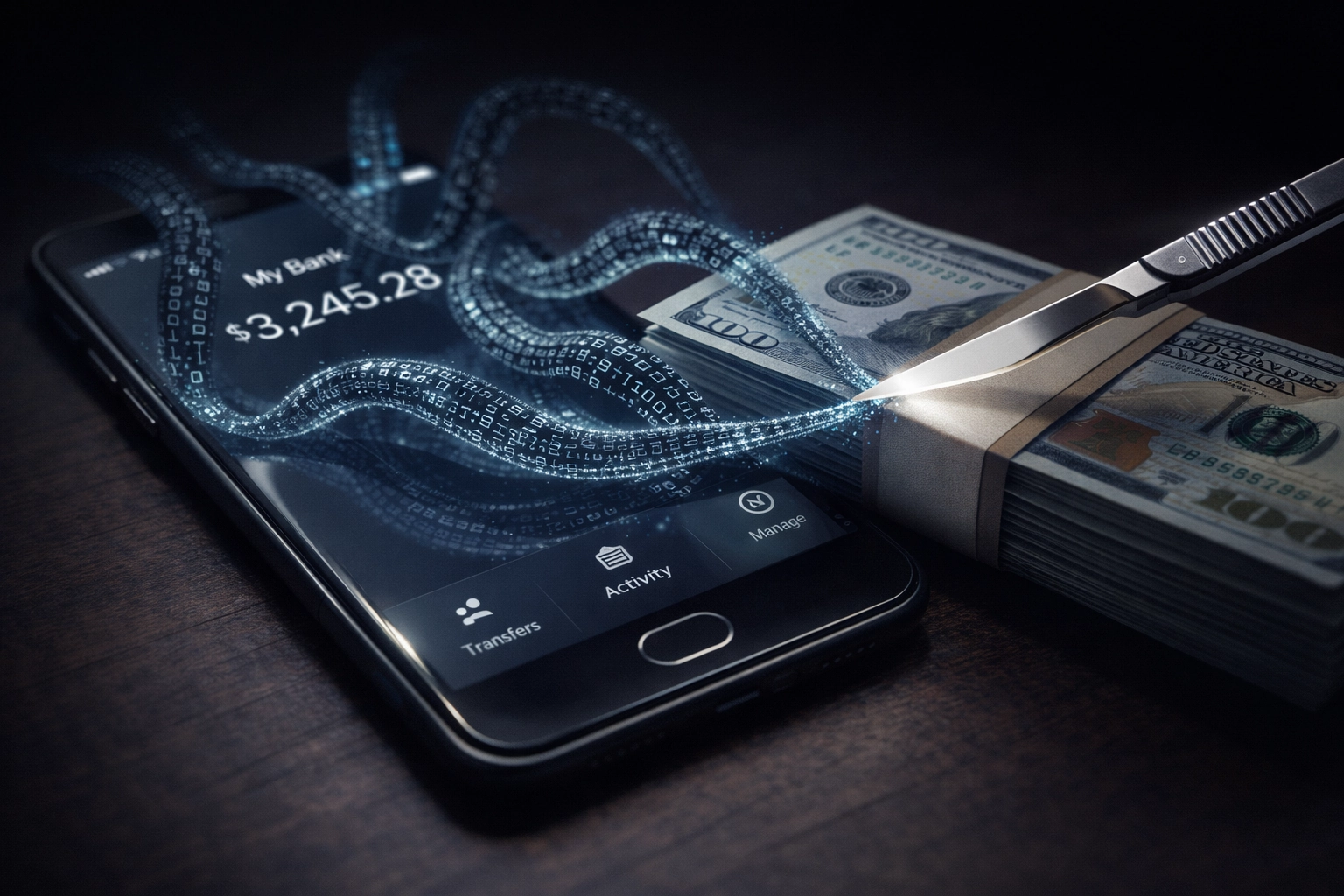
Modern corporations rely on “subscription fatigue” and deceptive UI designs (dark patterns) to keep you paying for services you stopped using months ago. The average consumer underestimates their monthly subscription spend by a staggering $130. To fight back, a massive industry of automated financial auditors—cancel subscription apps—has emerged. By syncing with your bank, these algorithms identify “ghost charges” and cancel them on your behalf. However, to maximize your returns, you must understand the hidden fee structures → these apps use before granting them access to your data.
This article is for you if:
✓You haven’t manually audited your bank and credit card statements in the last 6 months
✓You are paying for multiple streaming services, SaaS tools, or gym memberships you rarely use
✓You want to know if apps like Rocket Money, Trim, or Bobby are actually worth the cost
FReviewed by BMT Fintech Analysis Desk·
Sources: FTC, CFPB · For informational purposes only
THE BLIND SPOT
$273/mo
Average actual monthly subscription spend per U.S. consumer
C+R Research 2026 · Full sources → SEC 06
TECH
Plaid
Standard bank sync protocol
FEE MODEL
30-40%
Cut taken from negotiated savings
Key Commercial Facts
1Free versions of these apps usually only identify subscriptions; you must pay for premium to auto-cancel.
2If an app negotiates a $100 cable bill reduction for you, they legally extract a $30-$40 “success fee” upfront.
3Inertia is the enemy. Canceling just three $15/month ghost subscriptions yields an instant 5% APY equivalent return on $10,000.
Disclaimer: This article objectively analyzes commercial fintech applications for educational purposes. We do not receive compensation for mentioning specific apps. Always review an app’s privacy policy and data-sharing agreements before linking your primary financial accounts.
SEC 02PROBLEM— The Autopay Trap
SECTION 02 — THE PROBLEM
The Weaponization of Convenience
The “Subscription Economy” is built on a psychological exploit: Autopay. Companies make signing up a frictionless, one-click process, but they intentionally engineer the cancellation process to be a labyrinth of phone calls, retention agents, and hidden menus—a practice the FTC defines as “Dark Patterns.” Because the charges are small ($9.99 here, $14.99 there), your brain categorizes them as negligible. Over 12 months, however, these micro-transactions drain hundreds of dollars from your cash flow. Subscription tracker apps automate the discovery phase, scanning your ledger via Read-Only APIs (like Plaid) to flag recurring merchants. But outsourcing this task comes with its own set of commercial trade-offs.
The Manual Audit (DIY)
Requires exporting CSVs from multiple banks and credit cards
Takes hours to match cryptic merchant names to actual services
You must navigate the dark patterns and make the phone calls yourself
High chance of missing annual renewals that only hit once a year
The App Audit (Automated)
Algorithms instantly flag recurring patterns across all linked accounts
Provides a centralized dashboard of your entire subscription footprint
The app sends cancellation emails or calls retention agents for you
The Negotiation “Success Fee” Trap. If you use an app’s “Bill Negotiation” feature (common in Rocket Money or Trim), they will call your provider to lower the rate. If they successfully save you $200 a year, the app will immediately charge your credit card a “Success Fee” of 30% to 40% (e.g., $60 to $80) upfront. You are paying a premium for a 10-minute phone call you could have made yourself.
SEC 03EVIDENCE— Data + Sources (E-E-A-T)
SECTION 03 — EVIDENCE & DATA
The Hidden Math of Subscriptions
Streaming/Media (Hulu, Peacock, premium channels)
Digital SaaS (Cloud storage, editing apps, premium utilities)
Physical Services & Deliveries
Primary LeakMedia & SaaS
Cost-benefit breakdown of using an automated bill negotiation service
Profit ModelCommission
Source: BMT Financial Analytics, Federal Trade Commission (FTC) “Click to Cancel” Rule Data
SEC 04FAQ— Security & Mechanics
SECTION 04 — FAQ
Frequently Asked Questions
Reputable apps do not store your actual banking credentials. They use third-party aggregators like Plaid (the same system used by Venmo and Robinhood). Plaid establishes a secure, “Read-Only” token. The app can see your transaction history to spot recurring charges, but they absolutely cannot initiate transfers or move your money.
No. The algorithm only flags suspected subscriptions and presents them to you in a list. You must manually select which services you want to terminate. The app then acts as your authorized agent to execute the cancellation process.
Yes. Many major banks (like Chase and Capital One) and modern fintech cards (like Apple Card) now feature built-in “Recurring Charge” or “Subscription Tracking” hubs directly inside their mobile apps. They are 100% free and don’t require you to share data with a third party.
SEC 05DECISION— If/Then Framework
SECTION 05 — DECISION SUPPORT
The Subscription Audit Matrix
Use this commercial framework to choose the most cost-effective method to clean up your financial ledger.
Your Situation (IF)Recommendation (THEN)
You want full automation and don’t mind paying for convenience
Time is more valuable to you than the $3-$12/mo app fee
Use a Premium App (e.g., Rocket Money)
You just want to see the list but will cancel them yourself
You want the data without the success fees
Use the App’s “Free Tier” Only
You use a modern primary bank with an updated app
Your bank likely has a tracker built-in
Check your Bank’s “Recurring” Dashboard
A gym or service refuses to cancel and keeps charging you
They are intentionally violating cancellation policies
Call Your Bank to Issue a “Stop Payment”
FINANCIAL COMMENT — 80% GUIDE
Before paying an app to negotiate your internet or cable bill, try the “Retention Threat” strategy yourself. Call your provider, immediately ask to be transferred to the “Retention Department” (they are the only ones authorized to give discounts), and state you are canceling due to price. They will almost always offer you the promotional rate to stay, allowing you to keep 100% of the savings instead of surrendering a 30% cut to a third-party app.
SERIES
Expense Reduction & Budgeting
1 / 9 published
1
Wasting Money? The Best Cancel Subscriptions App to Save
← NOW
2Premium Too High? Lower Car Insurance Rates in 3 Easy Steps
3Stop Overpaying: Best Cash Back Apps 2026 for Groceries
4Tired of Fees? How to Lower Cable Bill and Save Hundreds
5Always Broke? Zero Based Budgeting Explained for Beginners
6Huge Hospital Debt? Negotiate Medical Bills Down by 50%
7Stop the Drain: Switch to Cheaper Cell Phone Plans in 2026
8Food Costs Up? How to Save on Groceries With 5 Simple Hacks
9Confused About Money? The 50 30 20 Rule Budget Makes It Easy
Before paying an app to negotiate your internet or cable bill, try the “Retention Threat” strategy yourself. Call your provider, immediately ask to be transferred to the “Retention Department” (they are the only ones authorized to give discounts), and state you are canceling due to price. They will almost always offer you the promotional rate to stay, allowing you to keep 100% of the savings instead of surrendering a 30% cut to a third-party app.