Missed Deadline? Set up an irs payment
plan in 5 Minutes
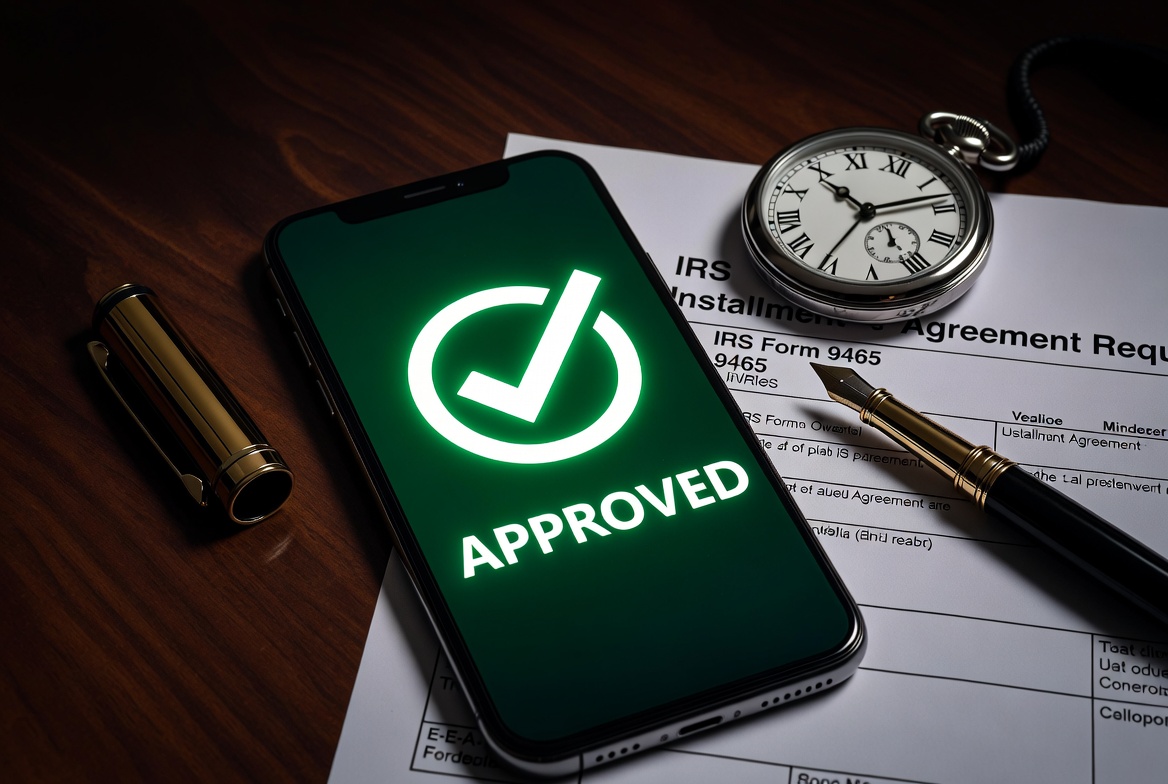
Owing money to the IRS can trigger severe financial anxiety, but ignoring the debt is a mathematical catastrophe. The IRS uses highly aggressive enforcement algorithms, deploying compounding interest, tax liens, and sudden wage garnishments to collect past-due balances. However, the IRS is actually one of the most accommodating collection agencies in the United States if you proactively communicate with them. By digitally establishing an official Installment Agreement, you instantly halt all hostile collection enforcement and legally stretch your tax burden over a 72-month period. Here is the CPA-verified execution blueprint detailing how to set up an irs payment plan → online, minimize setup fees, and mathematically protect your monthly cash flow from federal seizure.
This article is for you if:
✓You filed your taxes but cannot afford to pay the massive lump-sum balance due
✓You owe the IRS less than $50,000 in combined taxes, penalties, and interest
✓You want to immediately stop threatening IRS notice letters and protect your bank accounts
RReviewed by BMT Tax Desk·
Sources: IRS, Tax Code · Action Guide
THE HORIZON
72 Months
Maximum standard repayment term allowed
IRS Collection Data · Full sources → SEC 06
DEBT CEILING
$50,000
Max limit for auto-approval online
PENALTY CUT
50% Drop
Halves the failure-to-pay penalty rate
Key Execution Facts
1Apply online for an automatic 72-month plan.
2Set up direct debit to lower setup fees.
3File all past due returns before applying.
Disclaimer: This article provides strategic tax administration guidance based on 2026 IRS regulations. Establishing a payment plan does not erase your tax debt or eliminate accruing federal interest. If you default on your installment agreement by missing a payment, the IRS will void the contract and immediately resume aggressive collection actions.
SEC 02PROBLEM— The Avoidance Catastrophe
SECTION 02 — THE PROBLEM
Never Confuse “Filing” with “Paying”
The absolute worst financial decision you can make is refusing to file your tax return because you do not have the cash to pay the balance due. The IRS separates its punishments into two distinct categories: the Failure-to-File penalty and the Failure-to-Pay penalty. The penalty for simply ignoring the deadline and not filing the paperwork is a devastating 5% per month. The penalty for filing on time but failing to pay the cash is only 0.5% per month. You must always file your tax return on time to shield yourself from the 5% penalty, even if your bank account is at zero.
Once the return is filed, avoiding the IRS triggers their automated collection system. This leads directly to federal tax liens placed on your home and levies that legally drain your personal bank accounts without warning. By formally requesting an Installment Agreement, you enter an administrative “Safe Harbor.” The IRS immediately ceases all hostile collection activities. Furthermore, entering an approved payment plan automatically cuts your monthly failure-to-pay penalty in half, mathematically reducing the velocity of your compounding debt.
The Anxious Avoider
Does not file their tax return because they cannot afford the $5,000 bill
Gets hit with a massive 5% monthly Failure-to-File penalty
Ignores threatening IRS notices hoping the government forgets
Wakes up to find their entire checking account seized by a federal levy
The Proactive Planner
Files the tax return on time despite having zero cash to pay the bill
Logs into the IRS website and requests a 72-month payment plan instantly
Halts all federal collection actions and prevents wage garnishments
Cuts the ongoing Failure-to-Pay penalty rate by 50% automatically
ADMINISTRATIVE WATCH OUT
The Setup Fee Trap. The IRS charges an administrative fee simply to establish the payment plan. If you try to set this up over the phone or by mailing paper forms, they will charge you up to $225. You must apply digitally through the IRS website and agree to a Direct Debit from your checking account. This specific execution path slashes the setup fee down to just $31.
SEC 03EVIDENCE— Data + Sources (E-E-A-T)
SECTION 03 — EVIDENCE & DATA
The Math of IRS Avoidance
Official IRS administrative fees to establish the plan
Best RouteDigital
Catastrophic penalties for ignoring the IRS
Minimized penalties under IRS protection
Worst ErrorNo Filing
Source: Internal Revenue Service (IRS) Penalty Guidelines, CPA Administration Analytics
SEC 04FAQ— IRS Mechanics
SECTION 04 — FAQ
Frequently Asked Questions
No. An Installment Agreement stops the IRS from aggressively seizing your assets and mathematically lowers the penalty rates, but you will still accrue standard federal interest on the unpaid principal balance every single day until it is completely paid off.
Yes. The IRS does not charge any prepayment penalties. You can make lump-sum payments whenever you receive a bonus or sell an asset. Paying off the entire remaining balance ahead of schedule is highly recommended to minimize the total compounding interest costs.
If your combined tax debt exceeds $50,000, you lose access to the instant 5-minute online approval algorithm. You must submit a complex financial disclosure (Form 433-F) verifying your income and living expenses. An IRS agent will then manually calculate and dictate the required monthly payment based on what they believe you can afford.
SEC 05DECISION— If/Then Framework
SECTION 05 — DECISION SUPPORT
The IRS Defense Matrix
Use this tactical framework to deploy the exact IRS arrangement required to protect your specific cash flow situation.
Your Situation (IF)Recommendation (THEN)
You owe $8,000 and expect a massive bonus in exactly 4 months
Do not lock into a 72-month contract unnecessarily
Request a “Short-Term Payment Plan” online. This gives you 180 days to pay the balance in full and charges zero setup fees.
You owe $15,000 and need the absolute lowest possible monthly payment
You must maximize the amortization schedule
Apply for the standard 72-month Installment Agreement online and agree to automatic Direct Debit to secure the $31 setup fee.
You lost your job and mathematically cannot even afford a $50 monthly payment
You need an emergency administrative freeze
Call the IRS and apply for “Currently Not Collectible” (CNC) status. If approved, they pause all collection enforcement for up to a year.
You try to set up the payment plan online but you have unfiled tax returns from 2024
The IRS algorithm requires total compliance first
Stop the application. The system will instantly reject you. You must file all past-due tax returns before you can enter any settlement agreement.
CPA COMMENT — 80% GUIDE
Never default on a payment plan once it is established. If your checking account bounces the automatic debit, the IRS considers the contract breached. They will reinstate the higher penalty rates and resume levy operations. If you anticipate a cash shortage, call the IRS *before* the payment bounces to request a temporary modification.
SERIES
IRS Debt & Late Strategies
1 / 9 published
1
Missed Deadline? Set up an irs payment plan in 5 Minutes
← NOW
2Missed April 15? How to file taxes late Without Penalties
3Scared? what happens if you dont file taxes Explained 2026
4Huge Fees? Use an irs penalty abatement to Wipe Your Debt
5Drowning in Debt? The irs fresh start program Saves You
6Panicking? What to do if you forgot to file taxes in 2026
7Made a Mistake? How to amend tax return for a Huge Refund
8Need Help? The best tax relief companies 2026 Ranked Top 3
9Short on Cash? How to pay irs with credit card in 3 Steps
Internal Revenue Service (IRS) — Payment Plans and Installment Agreements(2026) · irs.gov
2
Internal Revenue Service (IRS) — Topic No. 653, IRS Notices and Bills, Penalties, and Interest Charges(2026) · irs.gov
Sources are cited for informational purposes. This material is designed to provide general administrative guidance. Always establish an online account directly at IRS.gov to verify your official balance before applying for a payment plan.
Never default on a payment plan once it is established. If your checking account bounces the automatic debit, the IRS considers the contract breached. They will reinstate the higher penalty rates and resume levy operations. If you anticipate a cash shortage, call the IRS *before* the payment bounces to request a temporary modification.