Erase Bad Debt: Use This Free Pay
for Delete Letter Template
Paying off a collection account online out of guilt is a massive tactical error. Under the standard FICO algorithm, a “Paid Collection” suppresses your credit score just as much as an “Unpaid Collection.” The only way to restore your creditworthiness is to completely eradicate the derogatory mark from your file. To do this, you must weaponize your cash. By utilizing a Pay for Delete agreement, you offer the collection agency a lump-sum settlement (typically 40% of the balance) only on the absolute condition that they completely remove the account from all credit bureaus. Here is the institutional blueprint and negotiation strategy → to execute this aggressive legal maneuver.
This article is for you if:
✓You have a valid debt in collections and have some cash saved to settle it
✓You already tried a Debt Validation letter, but the agency proved the debt is yours
✓You are preparing to buy a house and need a derogatory mark wiped off your report
CReviewed by BMT Credit Analytics Desk·
Sources: CFPB, NCLC · Action Guide
THE TARGET OFFER
30-40%
Optimal starting bid for a lump-sum cash settlement
Debt Buyer Economics · Full sources → SEC 06
LEVERAGE
Cash
Agencies want money today
FORMAT
Written
Never accept verbal promises
Key Negotiation Facts
1No Admission: A proper letter states “In the spirit of compromise” and never admits legal liability for the debt.
2The Economics: Collectors buy your debt for pennies on the dollar. A 40% settlement still yields them a massive profit.
3Certified Mail: You must send this letter via USPS Certified Mail with a Return Receipt to establish a paper trail.
Disclaimer: This article provides negotiation frameworks and a conceptual letter template for educational purposes. It is not legal advice. Debt collectors are not legally mandated to accept Pay for Delete offers. Always verify the Statute of Limitations in your state before engaging with a debt collector.
SEC 02PROBLEM— The Settlement Trap
SECTION 02 — THE PROBLEM
Do Not Pay Until They Guarantee Deletion
The standard advice of “just pay your debts” is catastrophic for your credit score once an account has gone to a third-party collection agency. If you call the agency and pay the $1,000 balance in full, they will happily take your money. Then, they will update your credit report to read “Paid in Full.” To a mortgage underwriter or the FICO algorithm, that “Paid” status still broadcasts that you were severely delinquent in the past. Your score will remain crippled.
You must leverage the economics of the debt industry. The collection agency likely bought your $1,000 debt for $40. They want cash, and they want it quickly. A Pay for Delete Letter leverages this greed. You are offering them a highly profitable $400 cash settlement today, but you are attaching a strict contractual condition: they must submit a request to Experian, Equifax, and TransUnion to completely erase the trade line.
The Unprotected Payer
Agrees to pay the debt over the phone without written proof
Gives the collector their debit card or checking account routing number
Receives a “Paid Collection” mark that suppresses their score for 7 years
Admits fault in writing, resetting the Statute of Limitations
The Tactical Negotiator
Sends a Pay for Delete letter stating “This is not an admission of liability”
Requires a signed agreement back from the agency before sending a dime
Pays using a Cashier’s Check or prepaid card to protect bank accounts
Forces a total deletion, causing an immediate 40+ point score jump
VERBAL WATCH OUT
Never Accept Verbal Agreements. A debt collector on the phone will aggressively say, “Yes, absolutely, if you pay us right now with your debit card, we will delete it from your credit report tomorrow.” They are lying. Debt collectors are incentivized by commission to say whatever it takes to secure payment. If it is not signed on their official company letterhead, the agreement does not exist.
SEC 03EVIDENCE— Data + Sources (E-E-A-T)
SECTION 03 — EVIDENCE & DATA
The Economics of the Deal
Approximate FICO score impact based on execution method
The Payoff+80 Pts
Why a 40% settlement offer is still highly profitable for the collector
Your LeverageHigh Margin
Source: National Consumer Law Center (NCLC) Debt Buyer Reports, BMT Analytics
SEC 04FAQ— Legal Mechanics
SECTION 04 — FAQ
Frequently Asked Questions
Yes, but it is frowned upon by the credit bureaus. The FCRA requires that if information is reported, it must be accurate. However, the law does not legally mandate collection agencies to report debts in the first place. By agreeing to a Pay for Delete, the agency is simply agreeing to stop reporting the account.
Rarely. Original creditors (like Chase, Capital One, or auto lenders) almost never agree to Pay for Delete arrangements because they have strict contracts with the credit bureaus to report accurate histories. This tactic is specifically designed for third-party collection agencies (debt buyers) who prioritize cash flow over credit bureau relationships.
If they say no, keep your money. Wait a month and send another letter with a slightly higher offer (e.g., jump from 30% to 50%). Debt collectors have monthly quotas to hit. A manager who said “no” on the 5th of the month might desperately say “yes” on the 30th when they need cash to hit their targets.
SEC 05DECISION— If/Then Framework
SECTION 05 — DECISION SUPPORT
The Deletion Execution Matrix
Use this action sequence to determine exactly when to deploy the Pay for Delete strategy versus other legal tactics.
Your Situation (IF)Recommendation (THEN)
You do not recognize the debt or believe the amount is totally wrong
The debt is valid, you owe it, and you have 40% in cash saved up
You are ready to negotiate a hard settlement
Send the Pay for Delete Letter via Certified Mail.
The agency agrees to delete and sends you a signed letter confirming it
You have the legally binding contract in hand
Mail them a Cashier’s Check or Money Order immediately.
The debt is 6.5 years old and about to fall off your report anyway
Paying it might accidentally reset the legal statute of limitations
Do Nothing. Let it naturally expire and fall off at Year 7.
TEMPLATE GUIDANCE — 80% GUIDE
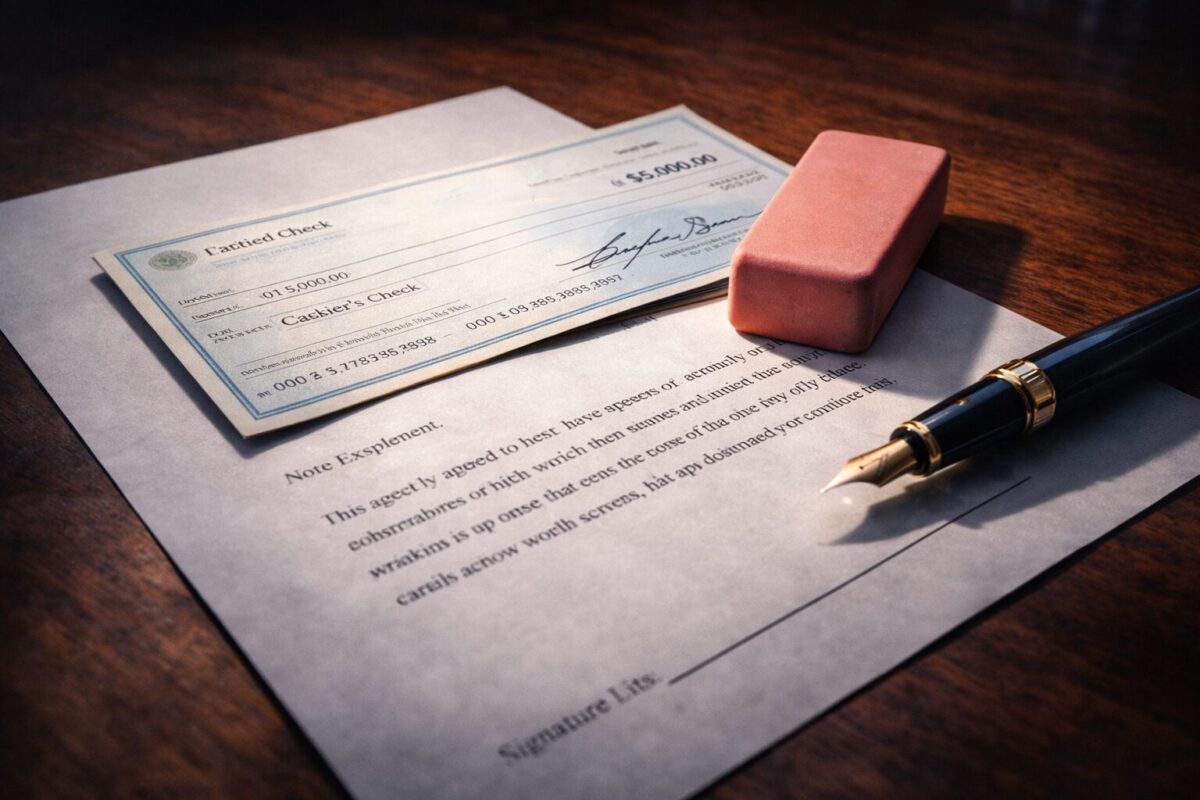
When writing your letter, structure it precisely: “I am writing to you regarding Account #XXXX. This is not an admission of liability. However, in the spirit of compromise, I am willing to offer a one-time lump-sum payment of $XXX to fully settle this account, provided you agree to immediately delete all references to this account from my credit profile with Equifax, Experian, and TransUnion. If you agree, please reply with a signed letter on company letterhead.”
When writing your letter, structure it precisely: “I am writing to you regarding Account #XXXX. This is not an admission of liability. However, in the spirit of compromise, I am willing to offer a one-time lump-sum payment of $XXX to fully settle this account, provided you agree to immediately delete all references to this account from my credit profile with Equifax, Experian, and TransUnion. If you agree, please reply with a signed letter on company letterhead.”