Executive Summary
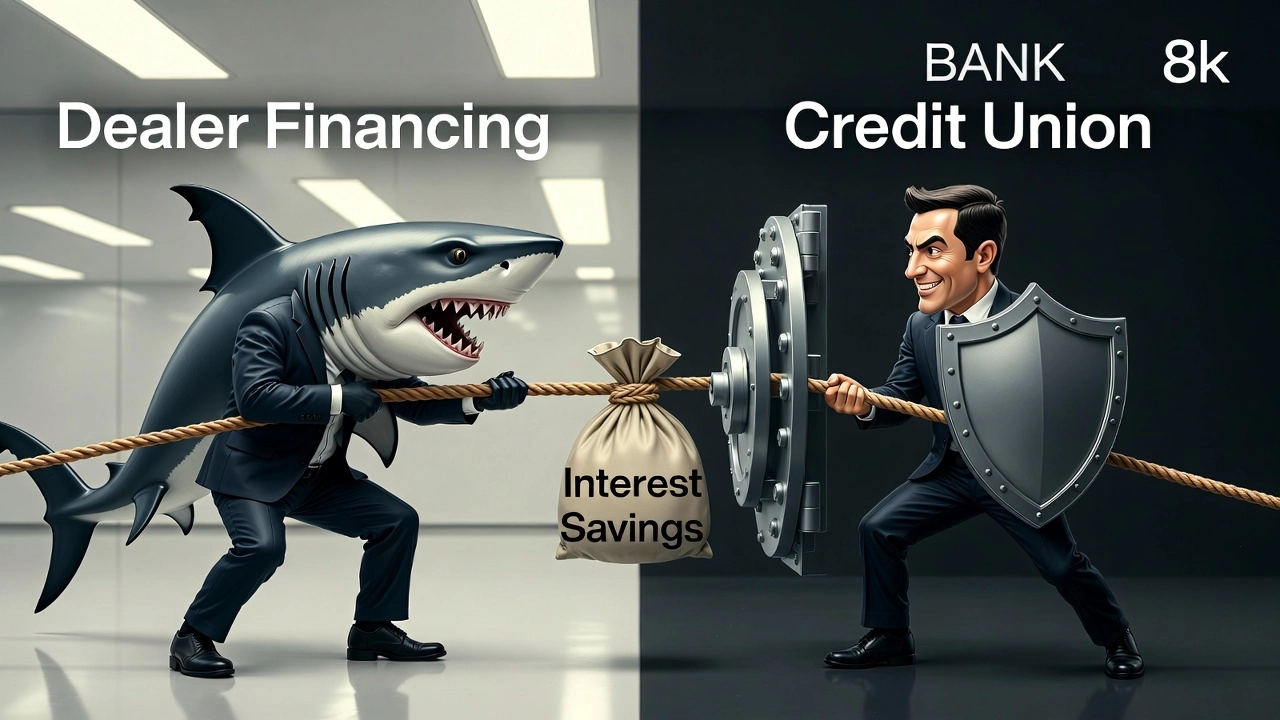
Never walk into a car dealership without financing in hand. Dealerships act as middlemen for loans and legally inflate interest rates (called “dealer reserve”) to generate profit. By securing a pre-approval from a Credit Union or bank beforehand, you cap the dealer’s ability to mark up your rate, often saving $1,000–$3,000 in interest over the life of the loan.
Here is the secret car dealers don’t want you to know: They make more money on the loan than they do on the car. The Finance & Insurance (F&I) office is not there to help you complete paperwork; it is a profit center designed to sell you debt at a premium. If you walk in asking “What are your rates?”, you have already lost. The only winning move is to bring your own money.
Following our guide on Car Affordability (20/4/10 Rule), this step ensures your carefully calculated budget isn’t destroyed by a predatory interest rate.
The Scam: “Dealer Reserve” Explained
When a dealer runs your credit, they receive a “Buy Rate” from their partner banks (e.g., 6.0%). They do not show you this rate. Instead, they offer you a “Contract Rate” (e.g., 8.0%). The difference—that extra 2%—is profit that goes directly into the dealer’s pocket. This is perfectly legal and happens in nearly every transaction involving uninformed buyers.
| Feature | Credit Union (The Shield) | Dealer Financing (The Trap) |
|---|---|---|
| Interest Rate | Lower, Flat Rate (Non-profit) | Higher (Includes markup) |
| Motivation | Member Service | Profit Maximization |
| Negotiation | Pre-approved “Check in Hand” | High-pressure Sales Tactics |
| Hidden Fees | Minimal / None | Origination & Processing Fees |
The Financial Impact of 2% Markup
A 2% difference might sound small, but on a $40,000 loan, it is substantial wealth destruction. Let’s compare a 60-month loan at a Credit Union rate (6%) vs. a Dealer Markup rate (8%).
In this scenario, the “Dealer Reserve” costs you $2,262 in extra interest. That is money transferred straight from your net worth to the dealership’s bottom line for zero added value.
The “0% APR” Trap: Read the Fine Print
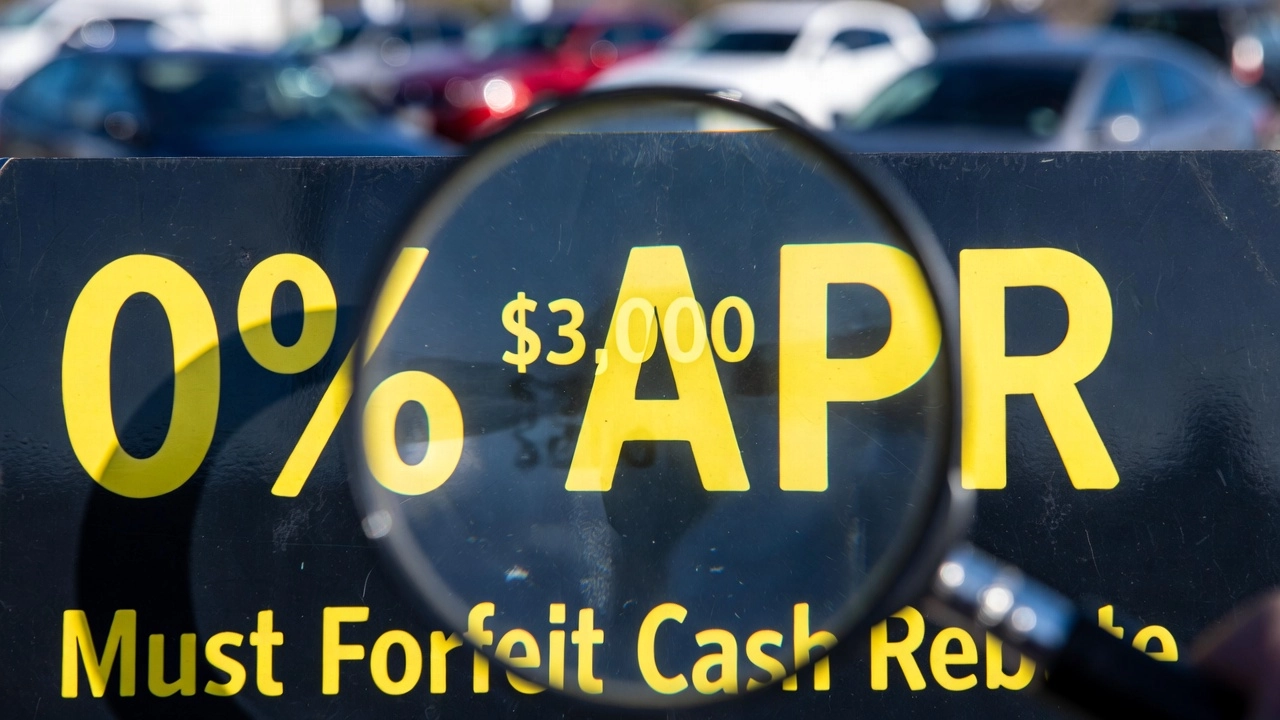
Dealers often advertise “0% APR for 60 months” to lure buyers. This sounds unbeatable, but there is usually a catch: You must forfeit the cash rebate.
- Option A: 0% APR but full price ($40,000).
- Option B: 6% APR but $3,000 cash rebate ($37,000 price).
Often, taking the rebate and paying standard interest results in a lower total cost or lower monthly payment. You must do the math. 0% is not “free money”; it’s a marketing expense paid for by removing discounts.
Your Strategy: The “Blank Check” Tactic
To win this game, follow these steps before you leave your house:
- Join a Credit Union: They are non-profit and historically offer rates 1-2% lower than big banks.
- Get Pre-Approved: Apply for an auto loan. If approved, they will give you a letter or a “blank check” up to a certain limit (e.g., $35,000 at 6.5%).
- Walk into the Dealer: Negotiate the car price as a “cash buyer.” Do not mention financing yet.
- The Reveal: Once the price is agreed, show your pre-approval. Tell the dealer: “I have 6.5% from my credit union. If you can beat it (e.g., 6.0%), I will finance with you. If not, I use this check.”
This forces the dealer to remove their markup to win your loan business.
Frequently Asked Questions
Does getting pre-approved hurt my credit score?
It triggers a “hard pull,” which may drop your score by 3-5 points temporarily. However, loan shopping within a 14-45 day window counts as a single inquiry on your credit report. The savings from a lower rate vastly outweigh a temporary 5-point dip.
Can a dealer beat a credit union rate?
Yes, sometimes. Dealers have access to “captive lenders” (like Toyota Financial or Ford Credit) that may offer subsidized rates (e.g., 2.9% or 4.9%) to move inventory. Always give the dealer a chance to beat your pre-approved rate, but never go in without a baseline.
What if the dealer says I must finance with them?
This is usually a lie or a bluff, unless the specific car price includes a “finance rebate.” If a dealer refuses outside financing, it’s a red flag. Be prepared to walk away. There are thousands of other cars.
Should I finance through my bank or a credit union?
Credit unions almost always offer better rates than big commercial banks because they are member-owned non-profits. However, online banks and aggregators can also be competitive. Shop around online before visiting a branch.
Conclusion: Financing is a Product, Shop for It
Treat the auto loan as a separate product from the car. You wouldn’t buy the first car you see without comparing prices; don’t buy the first loan the dealer puts in front of you. Your pre-approval letter is the ultimate leverage—it turns you from a “payment shopper” into a “cash buyer.”
Smart Spending Alert
Beware of the “Gap Insurance” Upsell. Once you settle financing, the dealer will try to sell you GAP insurance for $800+. Don’t buy it there. Read our guide on Is GAP Insurance Worth It? to see how to get it for $20.