Standard Mileage vs Actual Expenses: Which Saves Drivers More?
If you drive for Uber, DoorDash, or meet clients for freelance work, your car is your biggest tax deduction. The IRS gives you two roads: the easy Standard Mileage Rate (72.5 cents per mile) or the complex Actual Expenses (gas, repairs, insurance). Most people choose Mileage because it’s easier, but are they leaving money on the table? Here is the math to decide which method puts more cash back in your pocket.

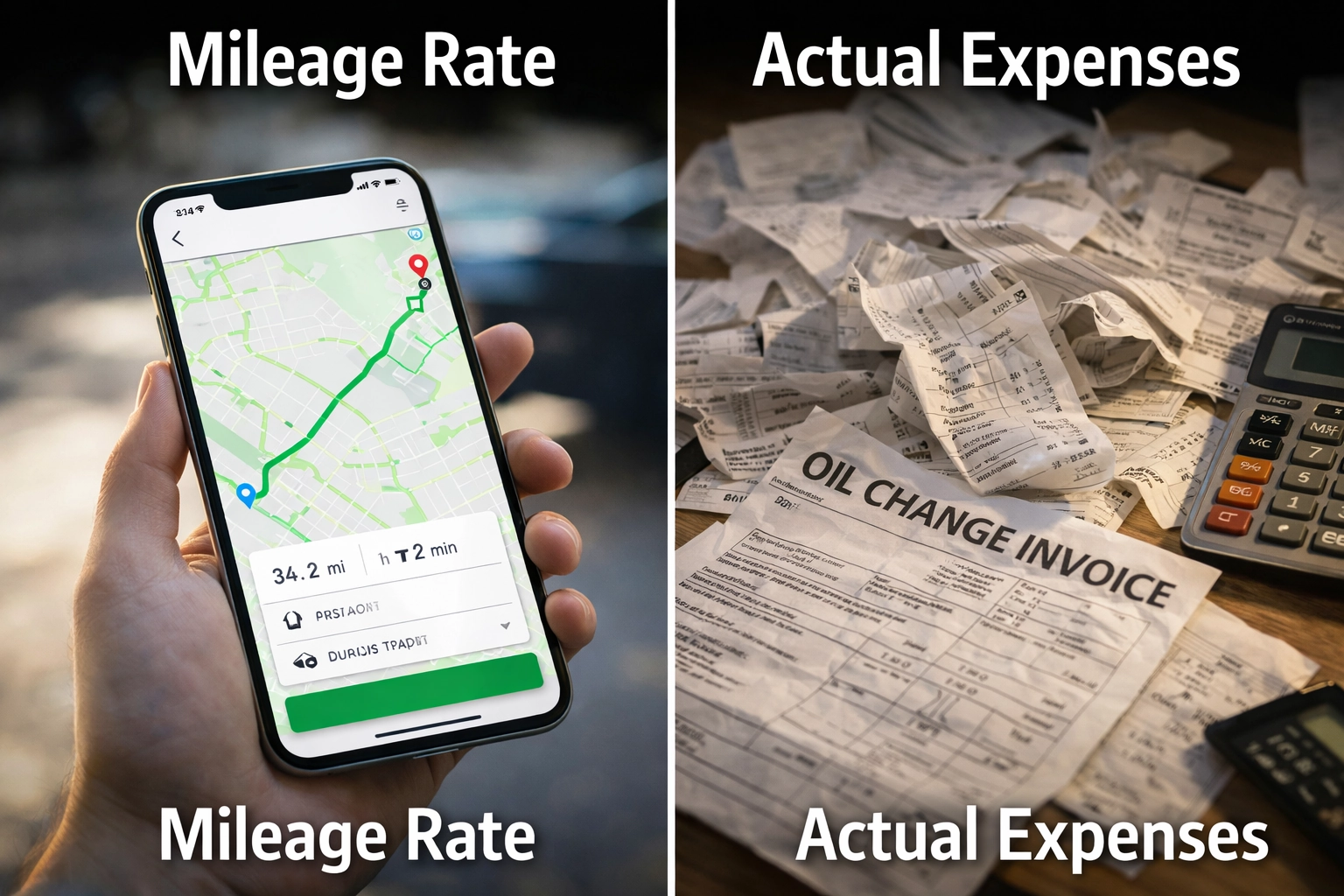
The Choice: The Standard Mileage method (left) requires a simple app log. The Actual Expenses method (right) requires hoarding every gas and repair receipt for the entire year.
Image Source: bestmoneytip.com
1. The Two Contenders Defined
You cannot double-dip. You must pick one lane for the tax year.
- Includes: Gas, Insurance, Repairs, Depreciation.
- Pros: Simple. No receipt hoarding.
- Extras: You can STILL deduct parking & tolls on top.
- Includes: Every gas receipt, oil change, new tires, insurance bill, lease payment.
- Pros: Better for expensive cars with low mileage.
- Cons: Administrative nightmare (keeping every receipt).
2. Why Mileage Usually Wins (The Prius Effect)
Let’s assume you drive a Toyota Prius for DoorDash. You drive 20,000 miles a year.
3. When Actual Expenses Win (The SUV Scenario)
Now assume you drive a big Ford Expedition for a luxury black car service. You get 12 MPG and pay high insurance.
- Gas/Repairs/Insurance: High.
- Depreciation: Massive (Luxury cars lose value fast).
- Result: Your actual cash outflow per mile might be $0.85. In this case, taking the standard 72.5¢ deduction means losing money. Actual Expenses is the better path here.
4. The Decision Matrix
| Vehicle Profile | Recommended Method |
|---|---|
| Old, Efficient Car (Civic/Prius) | Standard Mileage (Clear Winner) |
| New, Heavy SUV (Escalade/F-150) | Actual Expenses (Likely Winner) |
| Leased Vehicle | Actual Expenses (Lease payments are deductible) |
| Ride-Share / Delivery (High Miles) | Standard Mileage |
5. The Critical “Year 1” Rule
This is the most important paragraph in this article.
Strategy: Always choose Standard Mileage in Year 1. In Year 2, you can switch to Actual Expenses if you want. Choosing Mileage first keeps your options open.
6. No Log? No Deduction.
The IRS does not accept “estimates.” If you get audited, they will ask for a log.
1. Date (e.g., July 4)
2. Miles Driven (e.g., 45 miles)
3. Destination/Purpose (e.g., “Airport drop-off for client”)
4. Total Odometer Reading (Start/End of Year)
Recommendation: Use an app like MileIQ, Stride, or Hurdlr. They track automatically via GPS.