Living Trust vs Will: Which One Actually Protects Your Family?
Most people write a Will and think, “I’m done.” As a lawyer, I have to tell you the uncomfortable truth: A Will is just a letter to the Judge. It does not keep your family out of court. In fact, it guarantees they will go there. If you own a home or have assets over $208,850 (in states like California for 2026), a Will forces your family into “Probate”—a public, expensive, and slow legal nightmare. The Revocable Living Trust is the only vehicle that bypasses the court entirely. Here is the legal breakdown of why the Trust is the superior shield for your legacy.

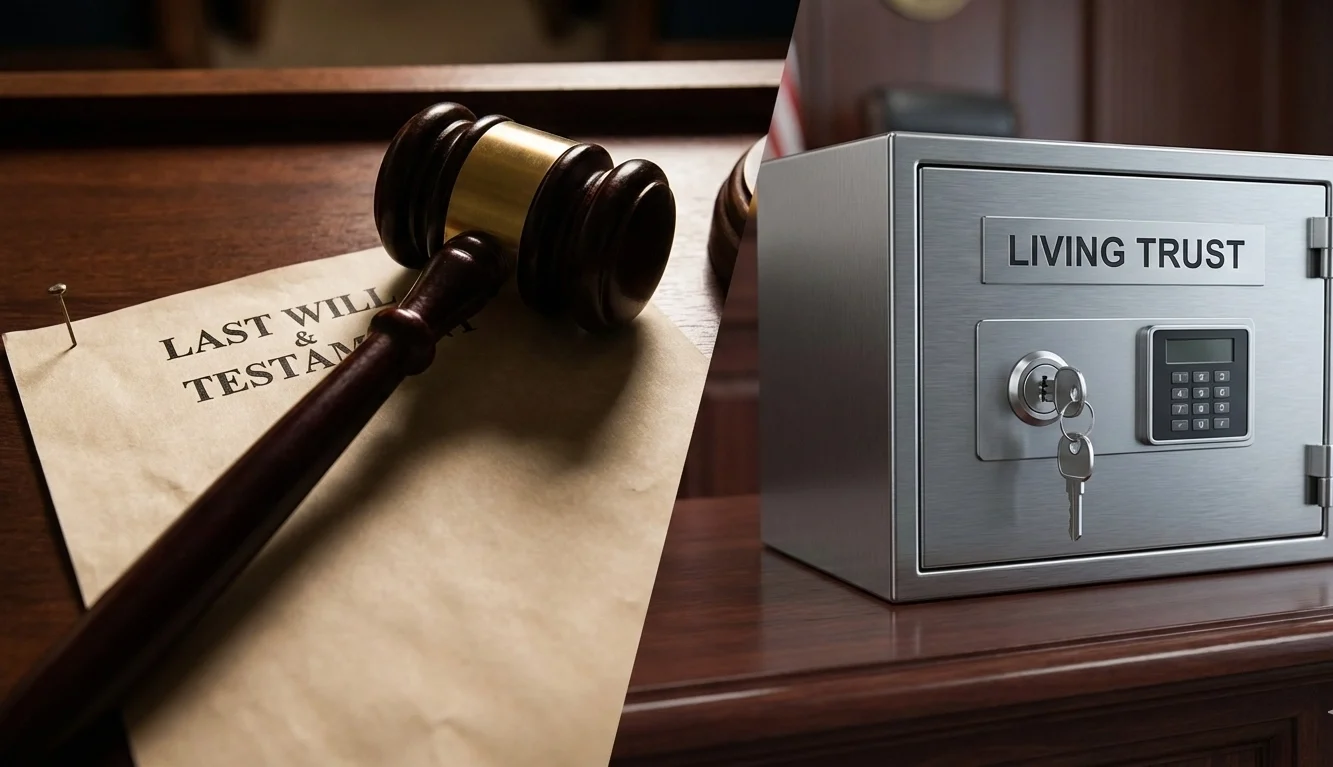
Think of a Living Trust as a treasure chest: You must put your assets (like your house and money) inside it for it to work.
Image Source: bestmoneytip.com
1. The “Probate” Trap
Why do lawyers push Trusts? Because we know what happens in Probate Court.
• It is Public: Anyone can download your Will and see who got what.
• It is Expensive: Lawyer fees and court costs can eat up 3-7% of your estate value.
• It is Slow: It typically takes 9 to 18 months. Your assets are frozen during this time.
2. Will vs. Living Trust: The Scorecard
Let’s compare them side-by-side on the metrics that matter.
| Feature | Last Will & Testament | Revocable Living Trust |
|---|---|---|
| Avoids Probate? | NO | YES |
| Privacy | Public Record | 100% Private |
| Asset Access | Frozen (12+ Months) | Immediate |
| Incapacity Protection | None (Only works at death) | Yes (Works if you fall ill) |
| Upfront Cost | Low ($0 – $500) | High ($1,500 – $3,000) |
3. How a Trust Works (The Box Analogy)
Think of a Living Trust as a treasure chest.
- Step 1 (Create): You buy the chest and write the rulebook (“If I die, give contents to my daughter”).
- Step 2 (Fund): This is crucial. You must retitle your house and bank accounts from “John Doe” to “The John Doe Living Trust.” You are putting your stuff inside the box.
- Step 3 (Manage): While you are alive, you hold the key (Trustee). You can put things in or take them out anytime.
- Step 4 (Handover): When you die, you simply hand the key to your Successor Trustee. No judge required. They just open the box and follow the rules.
⚠️ Critical Warning: The “Empty Box” Failure
A Trust is useless if it is empty (Unfunded). If you sign the Trust documents but forget to change the deed of your house from “Your Name” to “Your Trust,” the house still goes to Probate Court. This is the #1 mistake people make.
4. Do You Actually Need a Trust?
Not everyone needs a Ferrari. Sometimes a bicycle (Will) is fine.
- You own real estate: Especially if you own property in multiple states (avoids double probate).
- You have minor children: A Trust allows you to control when they get the money (e.g., “Not until age 25”). A Will hands it over at 18.
- Assets > $208,850: In CA (2026), this is the probate trigger limit. Other states vary.
- You rent your home: And have less than $100k in assets.
- Simple Beneficiaries: You just want everything to go to your spouse (spouses often have easier probate rules).
- Debt Heavy: You have more debts than assets. (Let the creditors fight in probate).