Medical Expense Deduction (2026): The 7.5% AGI Rule, Step-by-Step
This deduction is simple but brutal: you only deduct the portion of qualified medical expenses that exceeds 7.5% of your AGI—and only if you itemize on Schedule A. Use this page to decide in 2 minutes whether it’s worth the paperwork, then follow the exact steps.

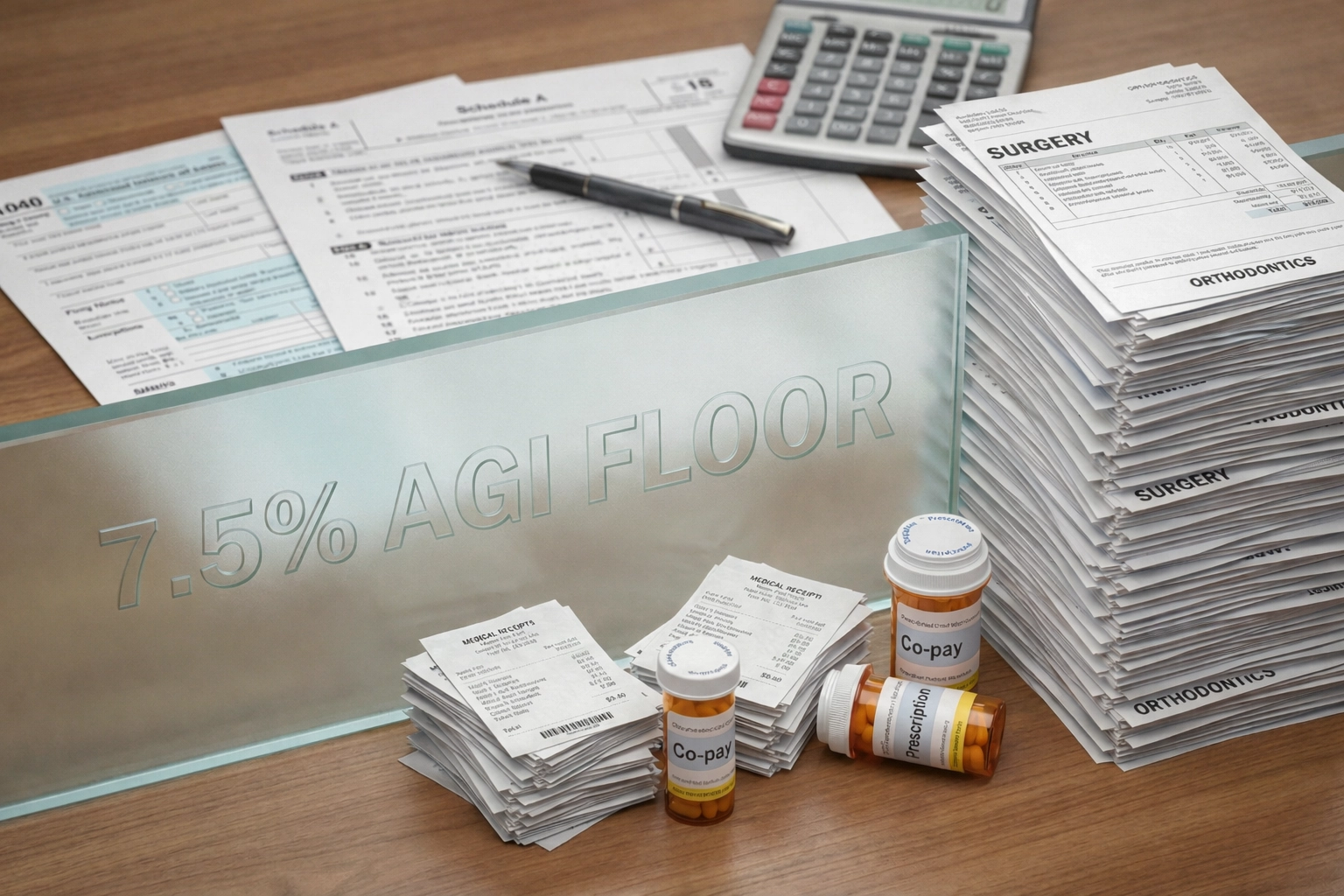
The 7.5% Wall: Your medical bills must stack higher than 7.5% of your income (The Floor) before the IRS gives you a single cent of tax relief.
Image Source: bestmoneytip.com
1. The 2-Minute “Is This Worth It?” Test
Before gathering receipts, check if you pass the gate. Most taxpayers fail here because the Standard Deduction is easier and often higher.
- You are willing/able to itemize on Schedule A (rejecting the Standard Deduction).
- Your medical costs were unreimbursed (paid by you, not insurance/HSA/FSA).
- Your total qualified expenses exceed 7.5% of your Adjusted Gross Income (AGI).
The One-Line Formula
max(0, Total Qualified Expenses − (AGI × 0.075))
2. The 7.5% Rule (The Reality Check)
The first 7.5% of your income is your responsibility. The IRS only helps with the “catastrophic” excess. See the table below to understand why many get $0 deduction.
| Your AGI | The “Floor” (You Pay) | Example Spend | Deductible Amount |
|---|---|---|---|
| $50,000 | $3,750 | $5,000 | $1,250 |
| $100,000 | $7,500 | $5,000 | $0 |
| $150,000 | $11,250 | $15,000 | $3,750 |
| $200,000 | $15,000 | $20,000 | $5,000 |
Reality Check
3. What Counts (and What Doesn’t)
Based on IRS Publication 502. Keep strict records.
✅ Included (Deductible)
- Premiums: Health insurance premiums paid with after-tax dollars (not employer pre-tax plans).
- Treatments: Doctors, dentists, surgeries, ER visits, therapy (psychologists/psychiatrists).
- Vision/Dental: Braces, Invisalign, LASIK, glasses, contacts, hearing aids.
- Supplies: Prescription drugs, insulin, wheelchairs, crutches, guide dogs.
- Travel: 20.5 cents per mile (2026 rate) for medical travel, plus parking/tolls.
❌ Excluded (Non-Deductible)
- HSA/FSA Spending: Already tax-free. Double-dipping is illegal.
- Cosmetic: Plastic surgery, teeth whitening (unless for deformity/accident).
- General Health: Gym memberships, vitamins, diet food (unless prescribed for specific disease).
- OTC Meds: Non-prescription drugs (e.g., Tylenol) are not deductible.
4. Core Strategy: “Bunching” Expenses
Since the 7.5% floor resets every year, spreading expenses is a losing strategy. The only way to win is to bunch elective procedures into a single tax year.
| Scenario (AGI $100k) | Year 1 Spend | Year 2 Spend | Total Deduction |
|---|---|---|---|
|
Plan A: Spread Out Braces (Yr1) / Lasik (Yr2) |
$6,000 (Below Floor) |
$4,000 (Below Floor) |
$0 |
|
Plan B: Bunched Do BOTH in Year 1 |
$10,000 (Beats Floor!) |
$0 (Skipped) |
$2,500 |
*In Plan B, you exceed the $7,500 floor by $2,500. That’s real money deducted from your taxable income.
5. How to File (5 Steps)
If you passed the test and have your receipts, here is the execution path.
- Confirm AGI: Look at Line 11 on your Form 1040. Calculate 7.5% of this number. This is your “Floor.”
- Sum Expenses: Add up all qualified, unreimbursed bills paid in the calendar year.
- Subtract Reimbursements: If insurance paid you back later, remove that amount.
- Calculate Excess: (Total Expenses) – (Floor) = Medical Deduction.
- File Schedule A: Enter this number on Line 1 of Schedule A (Itemized Deductions).
*Critical: Compare your total Schedule A vs. Standard Deduction. Choose the higher one.